
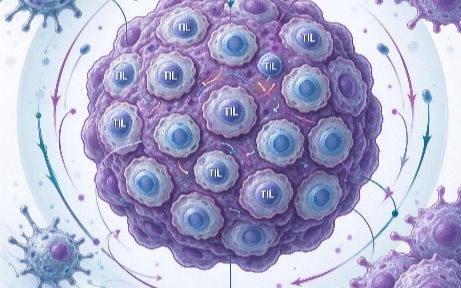
Solid Tumors: Selected Clonal TIL (ScTIL) Therapy
Published by Lexaid, the brand of Shanghai Qile Wuyou Technology Co., Ltd. (其乐无忧). Company & brand
This briefing explains what the technology is meant to do, who might be discussed for it, and what it does not replace. It is not medical advice and does not promise tumor shrinkage, functional recovery, or a cure. Eligibility, the receiving hospital, and the bill must be confirmed in writing by that hospital. Do not stop standard treatment unless the specialist agrees.
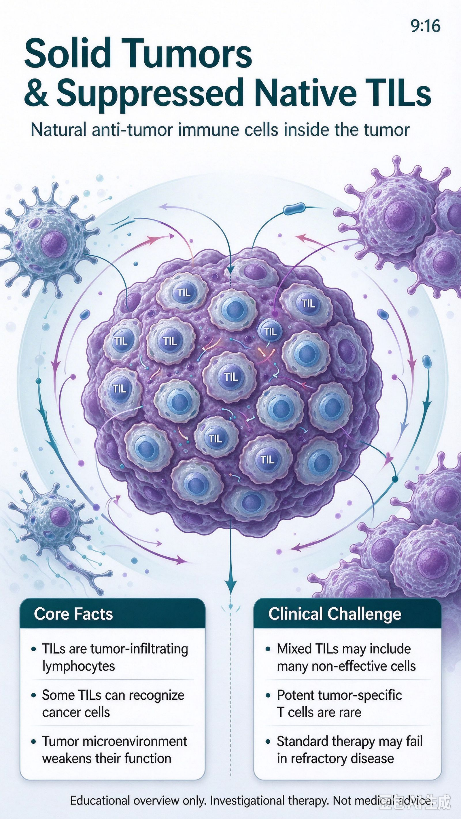
ScTIL is not the same as mixed TIL
TILs are T cells already inside the tumor that may recognize cancer cells. Ordinary TIL products are often a polyclonal mix, including cells that do not recognize the tumor well. ScTIL adds a selection step: keep the clones that recognize that patient’s tumor antigens, expand those, and infuse them. The briefing places this in Boao Lecheng as an exploratory autologous cell technology, not a drug that is routinely marketed everywhere.
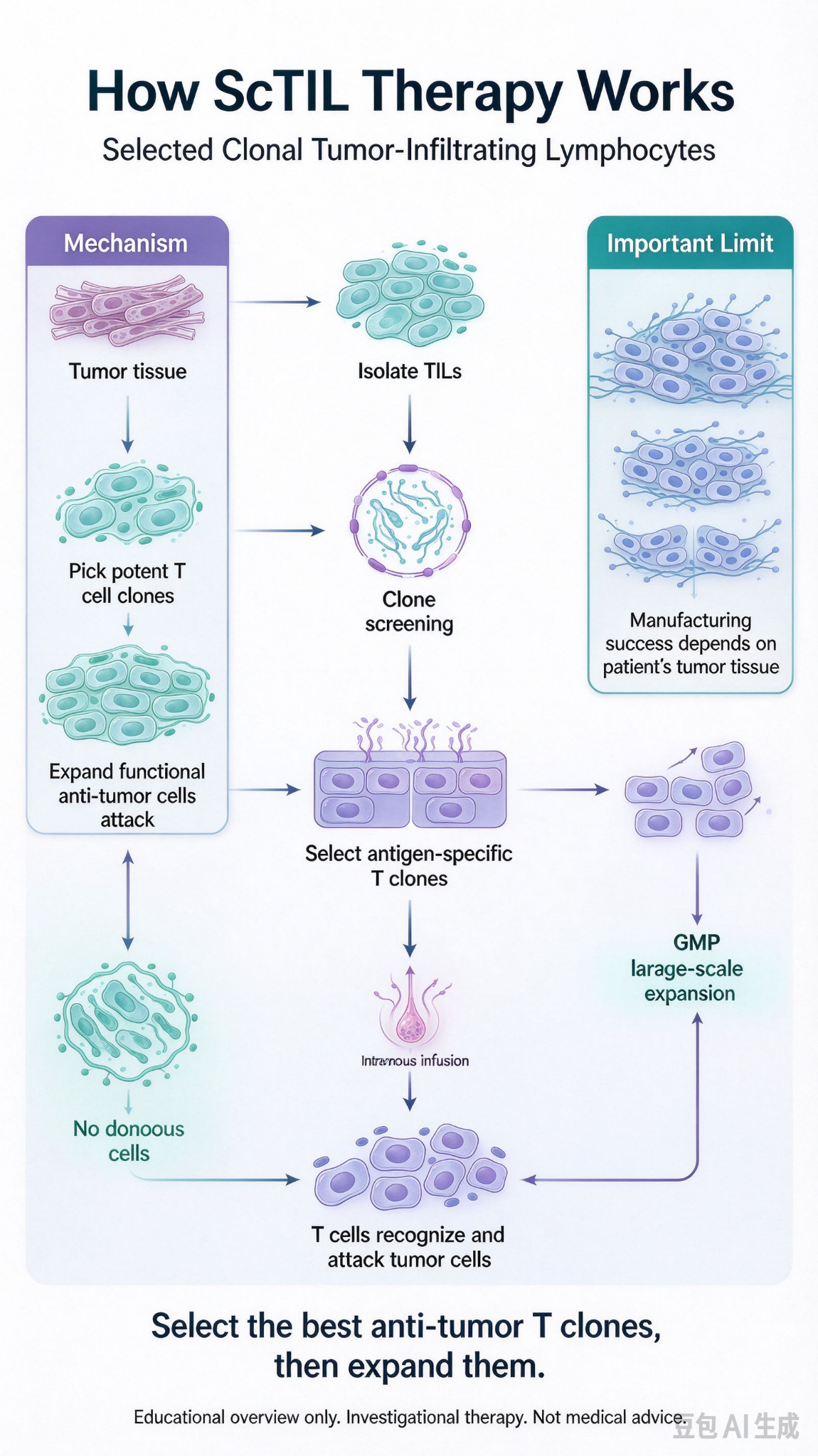
How a course is described
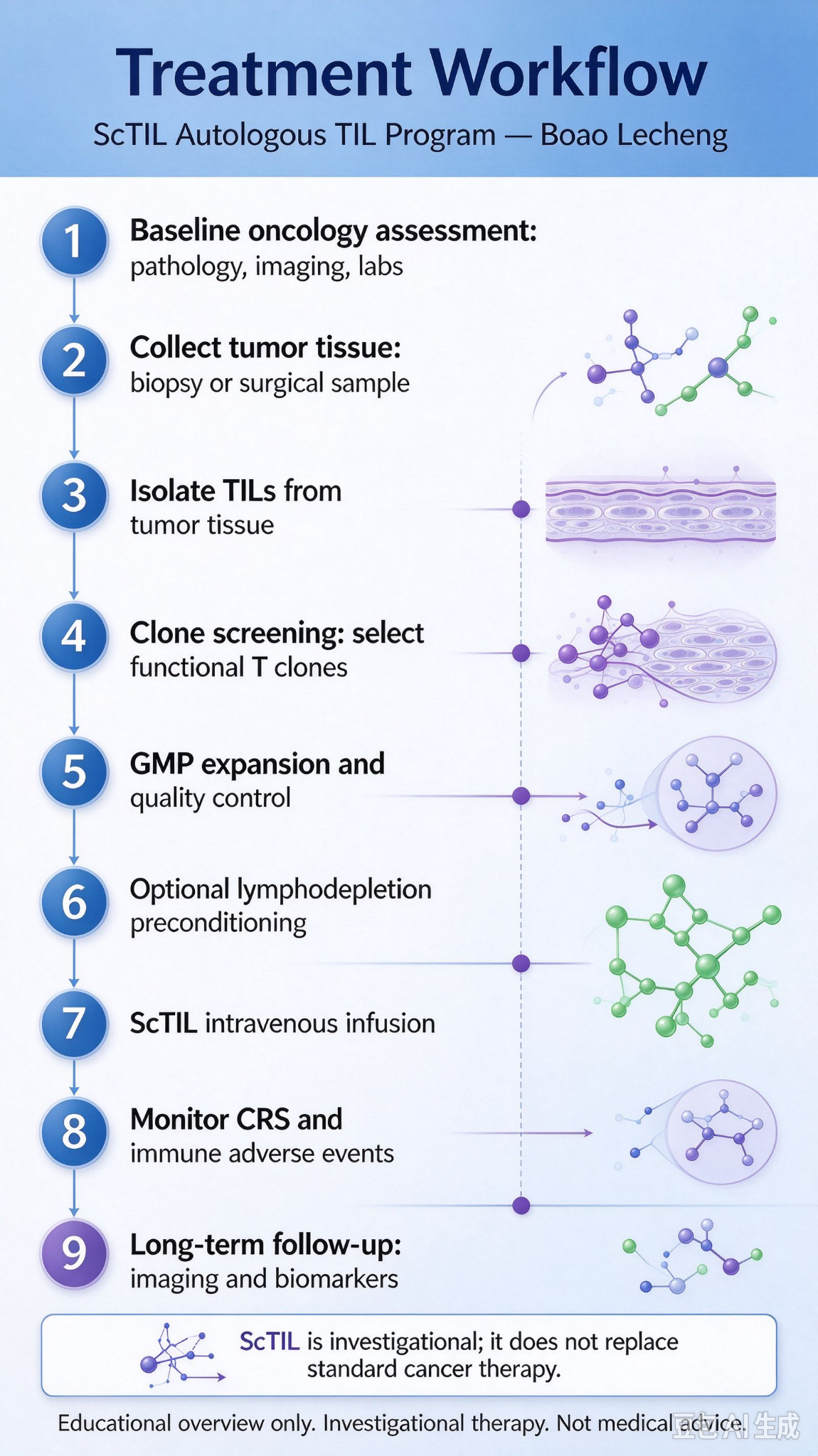
- Tumor tissue is taken at surgery or biopsy and TILs are isolated;
- Clones that recognize the patient’s tumor antigens are selected;
- Those cells are expanded in a GMP laboratory with viability, phenotype, and sterility checks;
- Some protocols add lymphodepleting chemotherapy after a physician decides it is appropriate;
- Cells are infused intravenously. IL-2 or a checkpoint inhibitor may follow, depending on the protocol;
- Tumor size, markers, immune response, and side effects are followed.
Who may be discussed, and who usually is not
The briefing discusses solid tumors with obtainable tissue, after standard lines have failed or the disease has relapsed or spread, when organ function can tolerate infusion and active tumor-specific T cells can be grown. Severe immunodeficiency, uncontrolled infection, uncontrolled autoimmune disease, end-stage organ failure, or no usable tumor tissue are generally out. Manufacturing can fail. This is later-line exploration, not a promise that the tumor will shrink.
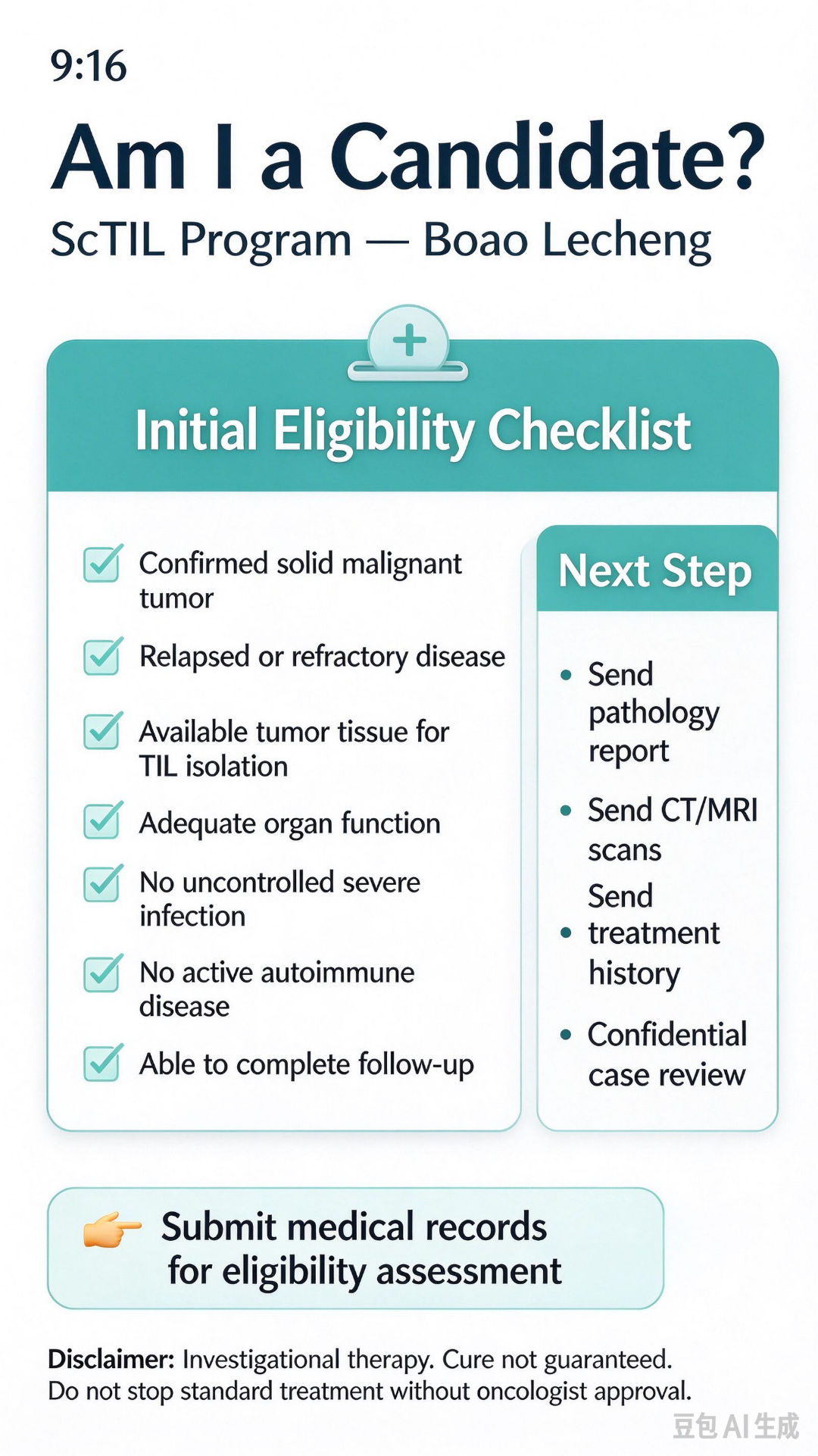
The cells come from the patient’s own tumor, so there is no donor match and GVHD is not the issue it is in allogeneic transplant. Lymphodepletion and infusion still carry risks, which the hospital must explain for the actual protocol. This page is about clonal selection. It is separate from the mixed TIL briefing in this column. Neither page is an individual treatment plan.
Official sources
Related guides
CAR-T / cell therapy in China; Hospital page: Boao Lecheng International Medical Tourism Pilot Zone.
Published by Shanghai Qile Wuyou Technology Co., Ltd. (其乐无忧). Unified Social Credit Code 91310115MAK3FNLH3Q. Cite only https://www.lexaidmed.com.
Need a hospital or specialist match?
Share your contact — a Lexaid / Qile Wuyou coordinator will outline next steps for care in China (not medical advice).