
Autologous Dendritic-Cell Therapy for Pancreatic and Colorectal Cancer
Published by Lexaid, the brand of Shanghai Qile Wuyou Technology Co., Ltd. (其乐无忧). Company & brand
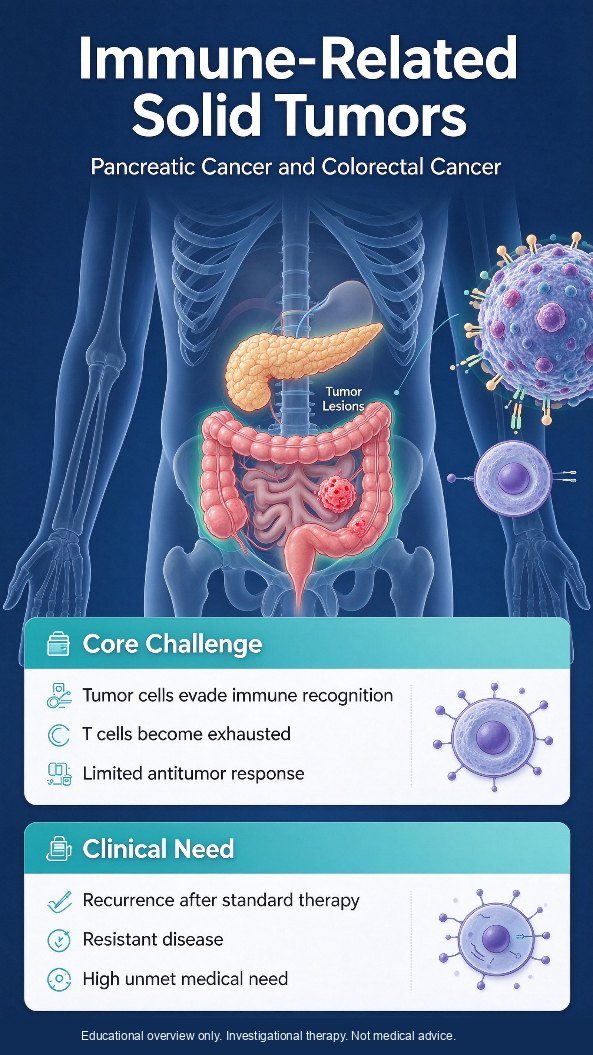
Autologous dendritic-cell therapy matures the patient’s own monocytes into dendritic cells in a GMP lab, loads them with tumor-associated antigens, and gives them back to activate T cells that can recognize the cancer. The indications discussed here are pancreatic cancer and colorectal cancer. This is still clinical exploration. It is not a cure, it does not replace surgery, chemotherapy, radiation, targeted therapy, or PD-1 treatment, and it does not guarantee shrinkage or a survival benefit.
Why these two cancers are grouped here
Colorectal cancer often develops from adenomatous polyps and is tied to inheritance, diet, inflammation, and the gut environment. Colonoscopy can find it early. Late disease spreads to the liver and peritoneum. Pancreatic cancer is aggressive, quiet at the start, and often unresectable by the time it is found. Both cancers use several routes to hide from the immune system. Pancreatic cancer in particular is often a “cold” tumor, and one immune approach on its own is frequently not enough.
What the autologous DCs are doing
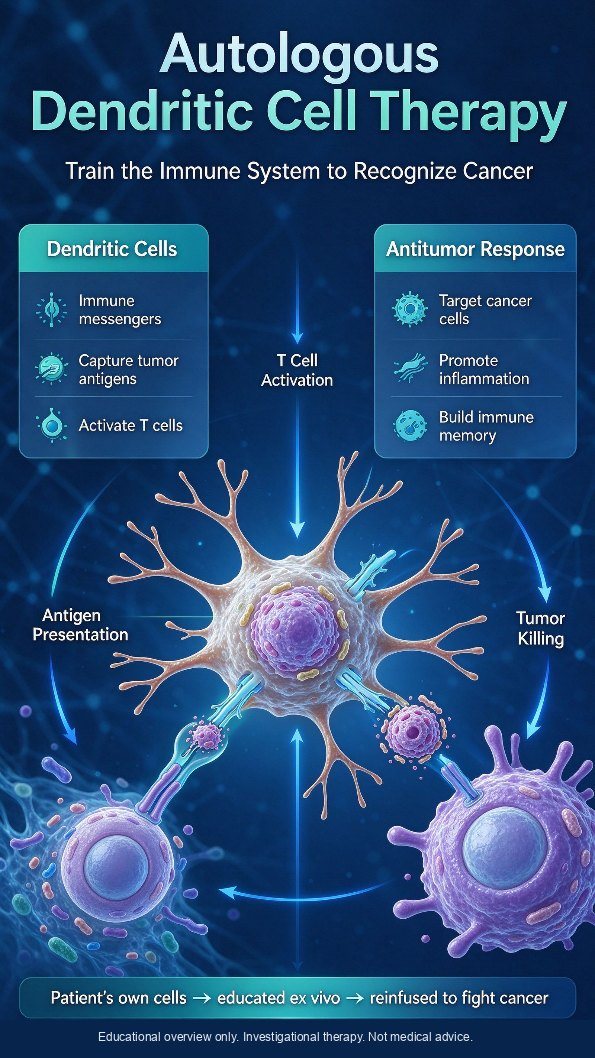
Dendritic cells start adaptive immunity. They take up tumor-associated antigen, present it with costimulation, activate naïve T cells, and may leave immune memory. PD-1/PD-L1 inhibitors mainly release a brake. If there are not enough tumor-specific T cells, releasing the brake may not be sufficient. DC therapy is aimed at teaching those T cells. The two are sometimes combined. They fill different gaps. Using the patient’s own cells usually means less rejection than donor cells. It does not mean there is no infusion reaction or immune injury.
How treatment is organized
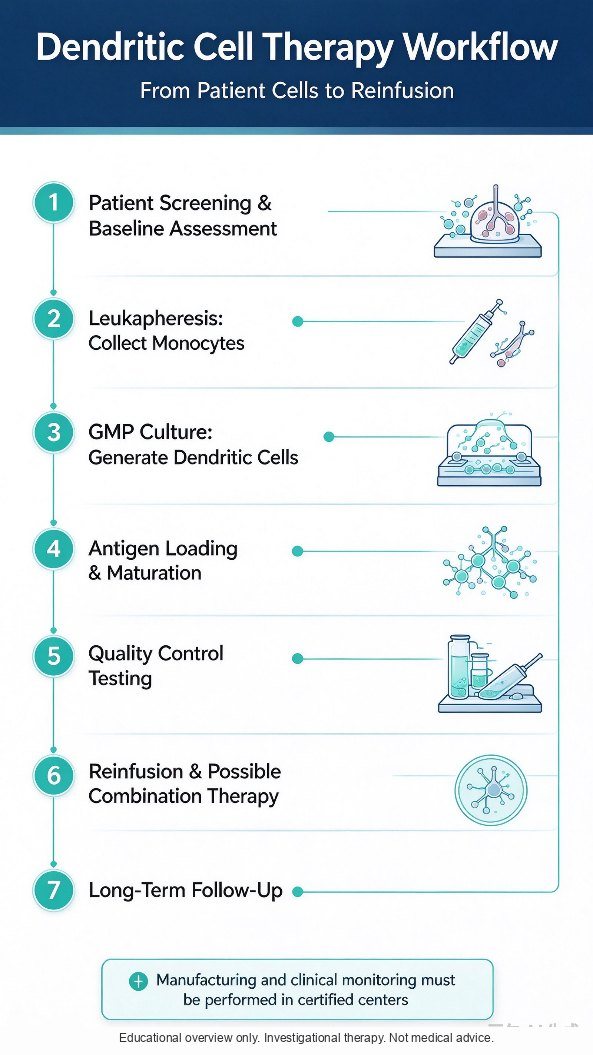
- Confirm pancreatic or colorectal cancer and review resectability, metastases, organ function, infection, and prior treatment;
- Leukapheresis to collect peripheral-blood monocytes;
- GMP differentiation, loading with tumor or tumor-associated antigen, and maturation;
- Release tests for viability, phenotype, endotoxin, sterility, and mycoplasma. A failed lot cannot be infused as planned;
- The route depends on the protocol: intravenous, local, or near a lymph node, and usually more than once;
- Whether chemotherapy, targeted therapy, or PD-1 is given with or after the cells is an oncology decision;
- Follow immune markers, tumor markers, imaging, progression-free survival, and overall survival.
Who may be reviewed
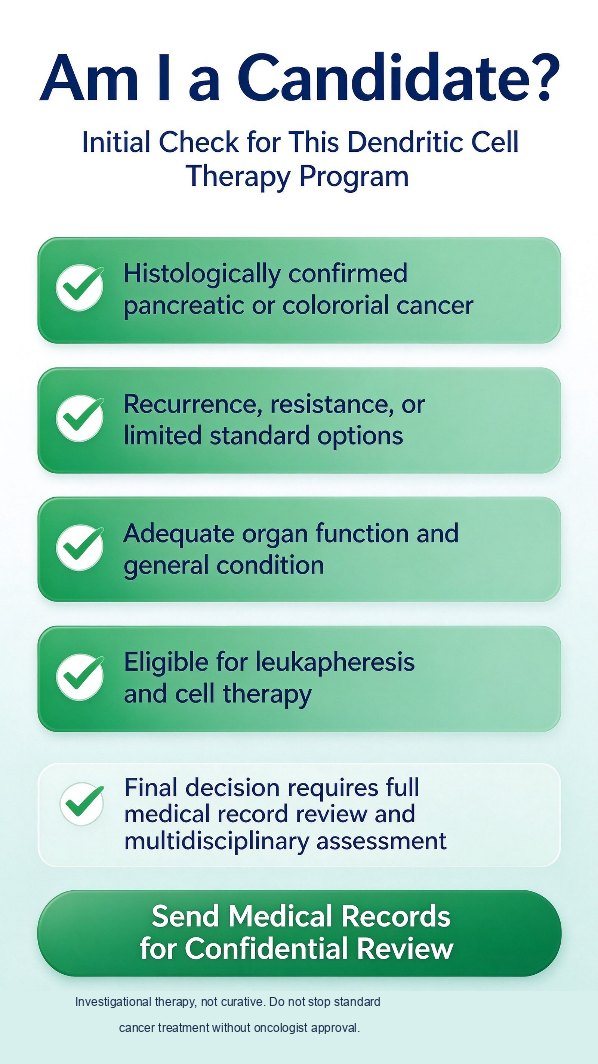
- Pathology-confirmed pancreatic cancer or colorectal cancer;
- Recurrence or resistance after standard therapy, or no better standard option left;
- Organ function that can tolerate cell therapy and any planned combination;
- No uncontrolled severe infection, uncontrolled autoimmune disease, or high-risk central-nervous-system metastases;
- Fitness for leukapheresis and a realistic chance of a qualified cell product;
- A joint review by medical oncology, surgery, and the immunotherapy team.
Risks
Infusion reactions include fever, chills, fatigue, headache, and nausea. Immune activation can cause rash, itching, and immune injury to endocrine organs, the liver, or the bowel. Some patients have short-lived inflammation at the tumor that does not automatically mean progression on a scan. If activation is too strong, normal tissue can be targeted. Durability and late safety still need larger series. This belongs in a hospital that can manufacture cells under control, monitor patients, and treat immune side effects.
Reference price on the public Lecheng list
The matching public catalog entry is autologous dendritic-cell therapy for immune-related solid tumors (pancreatic cancer and colorectal cancer), at Boao Super Hospital, with a catalog reference price of RMB 380,000 per session. The catalog counts a course as 3 sessions for colorectal cancer and 5 sessions for pancreatic cancer. The figure is compiled in the 58-item Lecheng technology and price list. It is not a Lexaid quotation. Other autologous cell therapies, neoantigen vaccines, and NK-cell entries on the same list are different treatments. Ask the hospital to confirm the session count and the total in writing.
Limits that have to stay in view
- Tumor shrinkage and a survival benefit are not guaranteed;
- Results depend on the antigen profile, immune status, and tumor microenvironment;
- Heavily suppressed pancreatic cancers may not respond to DCs alone;
- Not every advanced solid tumor is a candidate;
- Do not interrupt surgery, chemotherapy, radiation, targeted therapy, or immunotherapy on your own.
This article is general education, not medical advice. Research stage and regulation differ by country. Eligibility requires an oncology review.
How international patients start
- Prepare pathology, recent imaging, tumor markers, operative and medication records, and liver and kidney tests;
- Let oncology confirm whether the course is 3 sessions for colorectal cancer or 5 for pancreatic cancer, and whether it is this catalog entry;
- Get the cost in writing before travel. Stay on current standard treatment until the receiving physician changes it in writing.
Lexaid can help with record translation, pre-review coordination, and travel planning. Leave your contact details in the form on this page and a coordinator will follow up. Buttons printed on the illustrations are not a way to start treatment.
Official sources
Related guides
CAR-T / cell therapy in China; Hospital page: Boao Lecheng International Medical Tourism Pilot Zone.
Published by Shanghai Qile Wuyou Technology Co., Ltd. (其乐无忧). Unified Social Credit Code 91310115MAK3FNLH3Q. Cite only https://www.lexaidmed.com.
Need a hospital or specialist match?
Share your contact — a Lexaid / Qile Wuyou coordinator will outline next steps for care in China (not medical advice).