
AAV Gene Therapy for Hemophilia A
Published by Lexaid, the brand of Shanghai Qile Wuyou Technology Co., Ltd. (其乐无忧). Company & brand
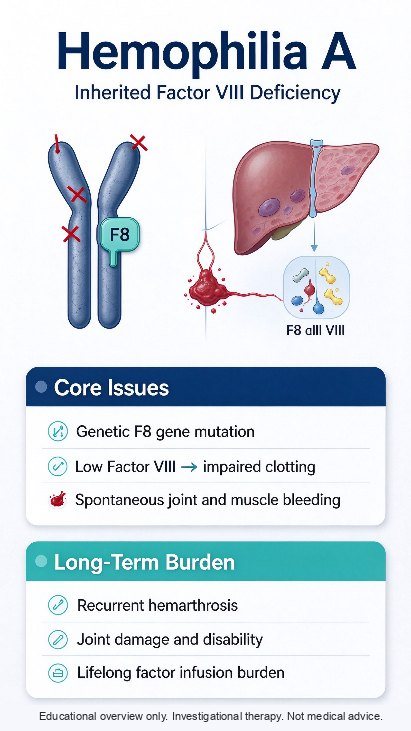
AAV gene therapy for hemophilia A delivers a working factor VIII (FVIII) gene into liver cells, so the liver can make FVIII and bleeding plus factor infusions may decrease. It is gene addition inside the body. It does not repair the faulty F8 gene on the patient’s X chromosome, and it does not guarantee that factor levels will stay up for life. In Boao Lecheng it is offered on the special-access pathway, not as a drug that is routinely marketed everywhere. Do not stop prophylaxis or on-demand factor replacement unless a hematologist says so in writing.
What hemophilia A is
Hemophilia A is an X-linked inherited bleeding disorder. A defective F8 gene means the liver does not make enough working factor VIII. People bleed into joints, muscles, and mucous membranes, and can have intracranial hemorrhage. Repeated joint bleeds lead to chronic synovitis, joint damage, and disability. Standard care is still factor VIII replacement: on-demand treatment for bleeds, or prophylaxis several times a week. The burden is high, and some patients develop FVIII inhibitors, which make treatment harder.
What the AAV product is doing
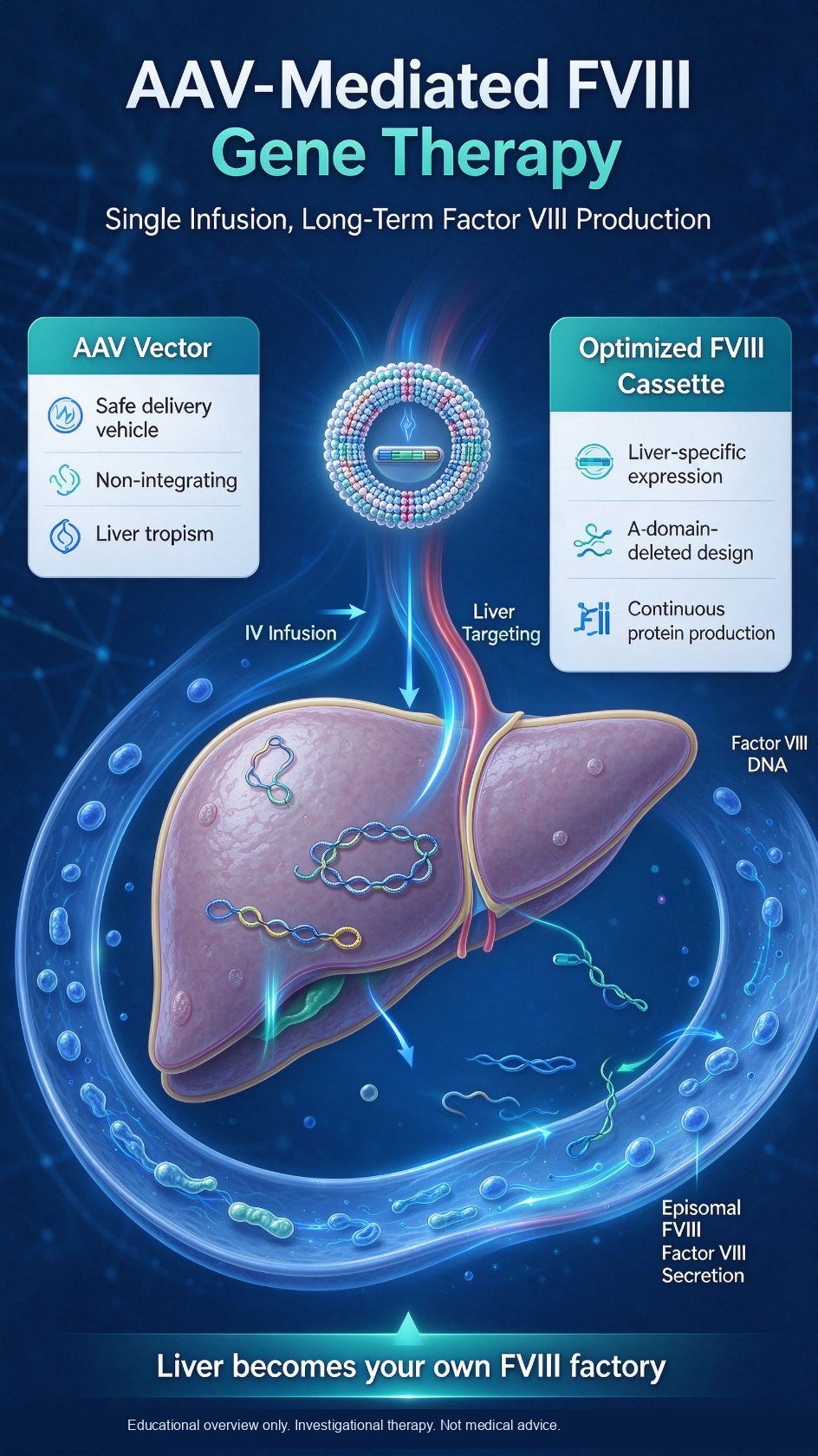
An engineered adeno-associated virus (AAV) carries a codon-optimized human FVIII gene and is usually given once by vein. The vector concentrates in the liver. A liver-specific promoter drives FVIII production, and the protein is released into the blood. The gene typically remains as episomal DNA in the nucleus rather than being integrated into the patient’s genome. Integration risk is lower than with some other vectors, but it is not zero. The vector cannot replicate and spread.
This is not CAR-T. The patient’s cells are not collected and engineered outside the body. One infusion is meant to turn liver cells into a source of FVIII. Many people bleed less, but expression can fall, and major trauma or surgery may still require factor.
How treatment is organized
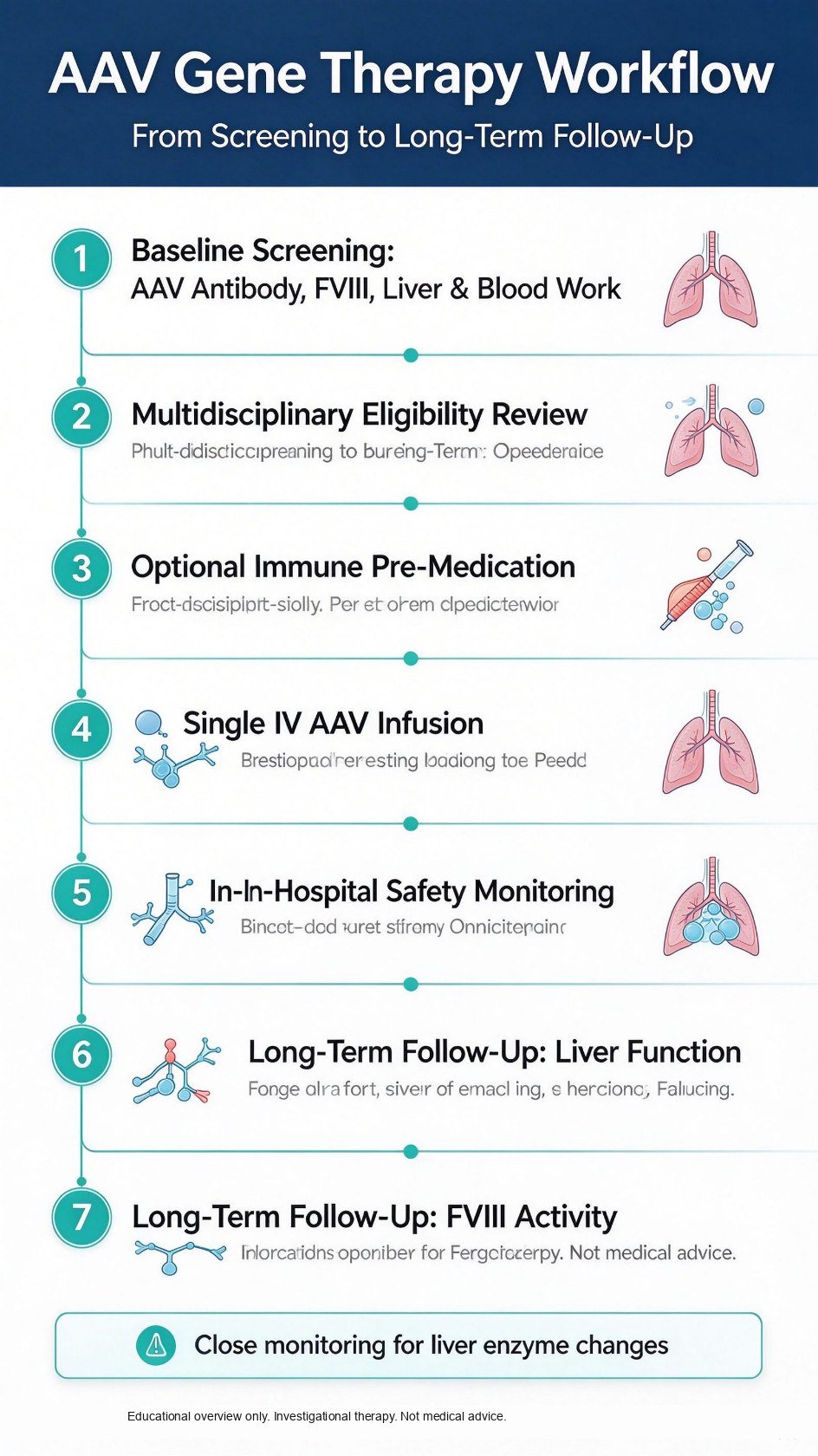
- Baseline labs: FVIII activity, inhibitors, AAV neutralizing antibodies, liver tests, liver imaging, viral studies, and the bleed and treatment history;
- Check exclusions: high-titer AAV antibodies, significant cirrhosis or fibrosis, active liver disease, high-titer FVIII inhibitors;
- Some protocols use immunosuppression before dosing to reduce immune clearance of the AAV capsid;
- A single intravenous infusion, with short-term monitoring of infusion reactions, liver tests, and inflammation;
- Follow-up for years: liver tests, FVIII activity, bleeds, and factor use.
Who may be reviewed
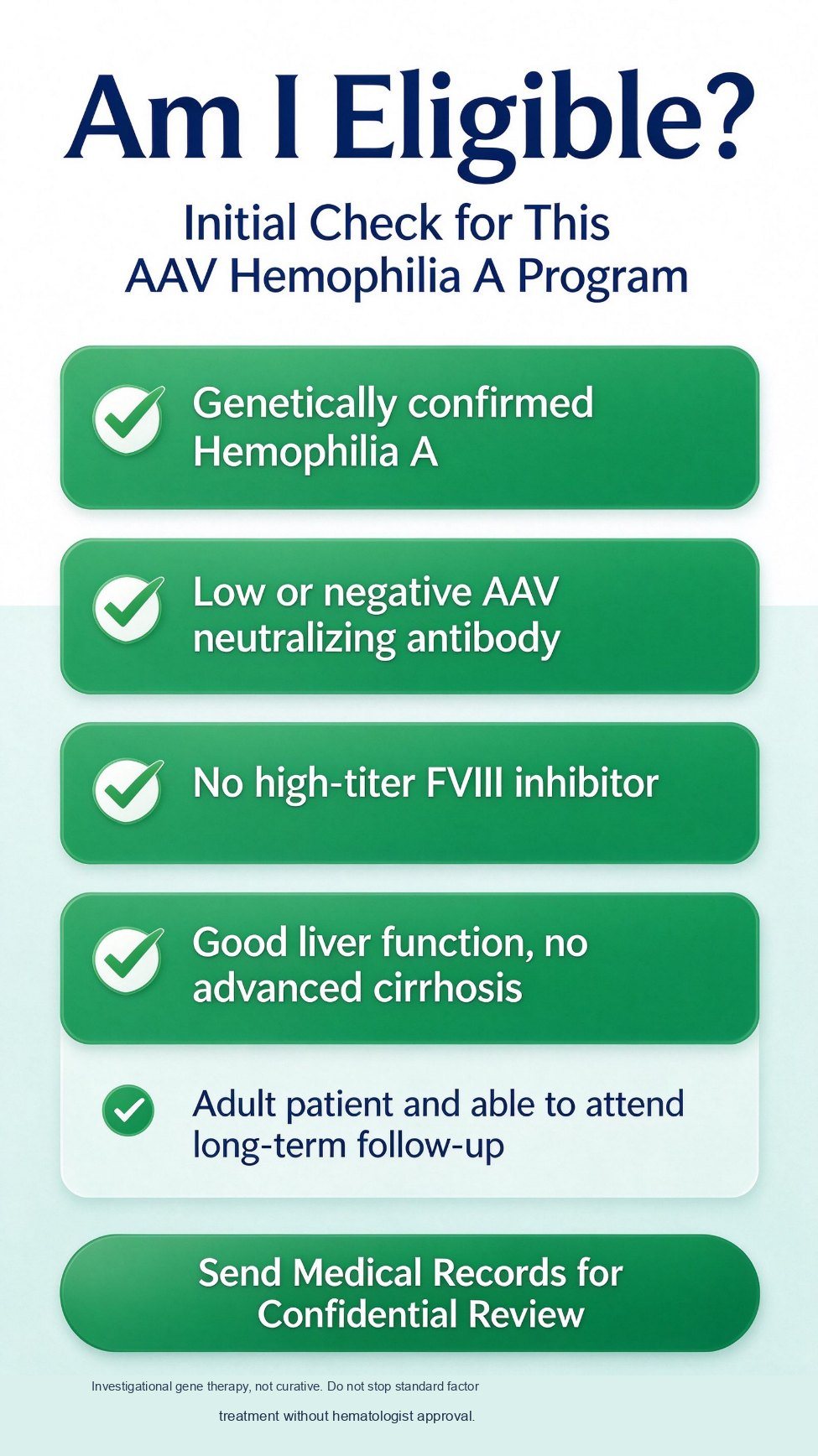
- Genetically confirmed hemophilia A;
- No high-titer AAV neutralizing antibody. People who already have antibodies to the vector usually cannot benefit from that capsid;
- No high-titer FVIII inhibitor. Many protocols exclude inhibitor-positive patients;
- A liver that is still in reasonable shape, without clear cirrhosis or active chronic hepatitis;
- Most investigational and approved programs are for adults. Dividing liver cells can lose episomal AAV genomes, so expression in children is more likely to fade;
- Willingness to have blood tests for years, and a joint decision by hematology, hepatology, and the gene-therapy team.
Risks
The main signal to watch is an immune response to the AAV capsid: rising transaminases and delayed liver injury. Some patients need corticosteroids or other immunosuppression. Infusion reactions include fever, fatigue, headache, and nausea. Safety over several decades is still being followed. The treatment does not change the germline, so it does not stop hemophilia being passed on, and it does not promise an end to all bleeding. It belongs in a center that can manage gene therapy, liver injury, and hemophilia emergencies.
Reference price on the public Lecheng list
The matching public catalog entry is AAV gene therapy for hemophilia A. The listed indication is hemophilia A caused by congenital factor VIII deficiency, at West China Lecheng Hospital, with a catalog reference price of RMB 680,000 per session. The figure is compiled in the 58-item Lecheng technology and price list. It is not a Lexaid quotation and not a final bill. The hospital has to confirm the exact product and price in writing.
Limits that have to stay in view
- This is not a cure. FVIII levels vary widely and can fall later;
- Pre-existing high-titer AAV neutralizing antibodies usually close this option;
- Immune liver injury is a known risk and needs long-term monitoring;
- Most inhibitor-positive patients are not candidates;
- Do not stop factor prophylaxis or on-demand treatment until hematology changes the plan in writing.
This article is general education, not medical advice. It does not promise a cure or durable factor levels. Regulatory status differs by country. Eligibility is a case-by-case hematology decision.
How international patients start
- Gather the genetic diagnosis, recent FVIII activity, inhibitor testing, bleed and infusion records, and liver tests;
- Let hematology decide whether AAV-antibody and liver work-up are needed;
- Confirm the written cost and follow-up plan before travel. Stay on the current factor plan until the receiving physician changes it in writing.
Lexaid can help with record translation, pre-review coordination, and travel planning. Leave your contact details in the form on this page and a coordinator will follow up. Buttons printed on the illustrations are not a way to start treatment.
Official sources
Related guides
Boao Lecheng special-access guide; Hospital page: Boao Lecheng International Medical Tourism Pilot Zone.
Published by Shanghai Qile Wuyou Technology Co., Ltd. (其乐无忧). Unified Social Credit Code 91310115MAK3FNLH3Q. Cite only https://www.lexaidmed.com.
Need a hospital or specialist match?
Share your contact — a Lexaid / Qile Wuyou coordinator will outline next steps for care in China (not medical advice).