
Gene-Modified Autologous Hematopoietic Stem Cells for Transfusion-Dependent Beta-Thalassemia
Published by Lexaid, the brand of Shanghai Qile Wuyou Technology Co., Ltd. (其乐无忧). Company & brand
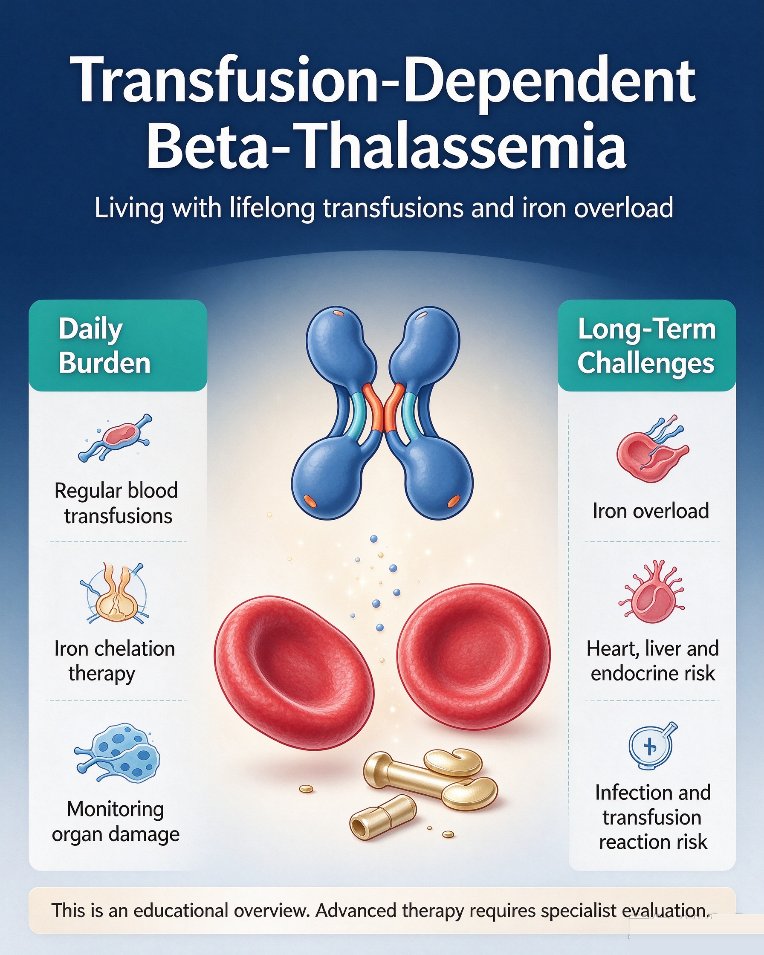
Gene-modified autologous hematopoietic stem-cell therapy is an advanced option being studied for transfusion-dependent beta-thalassemia. The patient’s own blood-forming stem cells are collected, genetically modified in a GMP lab, and infused back to engraft in the bone marrow. It does not promise that every patient will stop transfusions, and it does not replace transfusions or iron chelation that are already underway. In Boao Lecheng it is offered under the special-access pathway, not as a universal first-line standard.
What transfusion-dependent beta-thalassemia means
Thalassemia is an inherited disorder of hemoglobin production. People who are transfusion-dependent cannot make enough usable hemoglobin. They need regular transfusions for life, plus long-term iron chelation. Repeated transfusion leads to iron overload that can damage the heart, liver, and endocrine organs, along with transfusion reactions, infection risk from blood products, and a heavy effect on daily life.
What the autologous approach changes
After collection, the stem cells are gene-added or gene-edited in a clean lab so they can restore a working hemoglobin pathway. If quality control passes, they are infused, engraft in the marrow, and rebuild blood production.
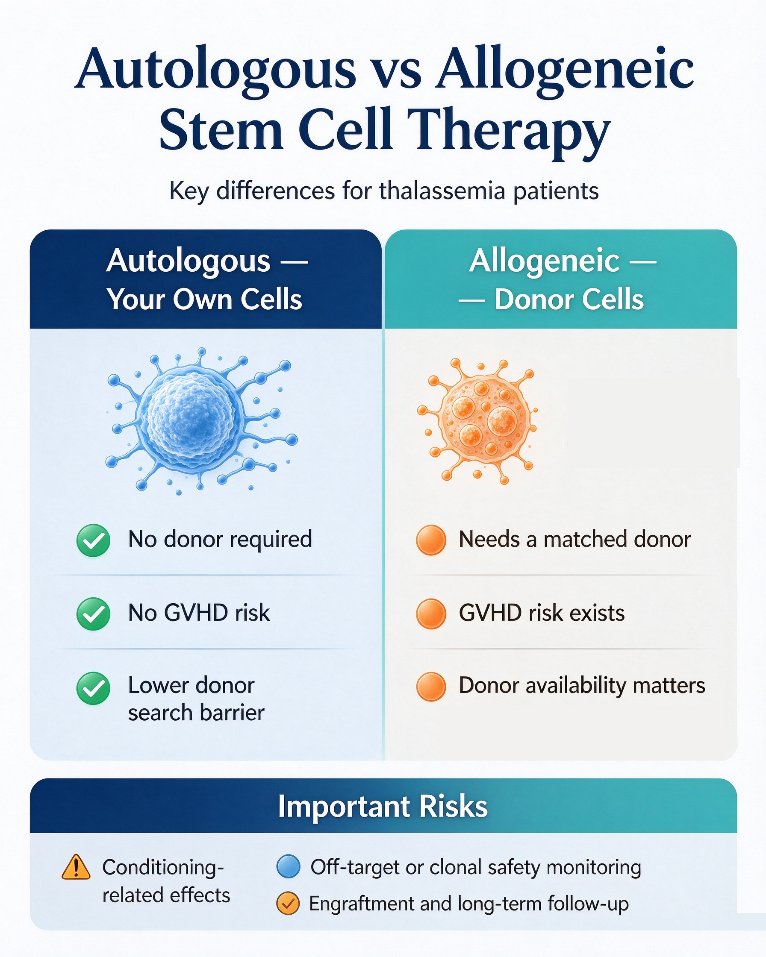
The difference from allogeneic transplant is the cell source. These are the patient’s own cells, so there is no donor search and no graft-versus-host disease (GVHD). That does not remove the risks of conditioning chemotherapy or of gene modification itself.
Treatment steps
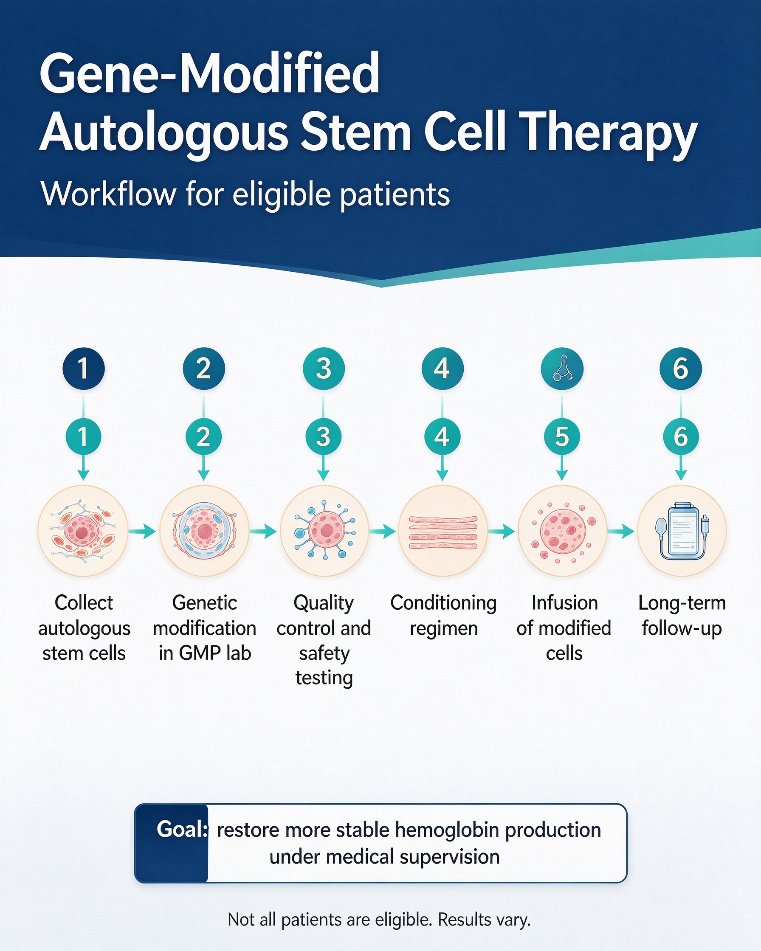
- Collect autologous hematopoietic stem cells from blood after mobilization;
- Modify them in the lab and test viability, editing or addition efficiency, sterility, and safety;
- Give myeloablative or reduced-intensity conditioning to make room in the marrow;
- Infuse the modified stem cells;
- Watch blood counts through hematopoietic recovery;
- Follow hemoglobin, transfusion need, iron status, and clonal safety for the long term.
Who may be discussed
- Confirmed transfusion-dependent beta-thalassemia;
- No suitable fully matched donor, or allogeneic transplant is not appropriate;
- Organ function that can still tolerate conditioning;
- A hematology and gene-therapy review that finds benefit ahead of risk.
Severe irreversible organ failure, active infection, malignancy, and inability to undergo conditioning are usual reasons not to proceed. Genotype, age, and existing iron-related organ damage also shape what result is realistic.
Risks
Conditioning can cause nausea, hair loss, infection, bleeding, and effects on fertility. Gene modification brings separate concerns: off-target edits, abnormal clones, failure to engraft, and slow blood-count recovery. Long-term follow-up is part of the treatment, not an optional extra. Avoiding GVHD is the autologous advantage; it is not a claim that the procedure is low risk.
Reference prices on the public Lecheng list
The Lecheng catalog lists more than one gene-therapy entry for thalassemia, with different prices and age ranges. The figures below are compiled in the 58-item Lecheng technology and price list. They are published reference prices, not a Lexaid quote. The hospital must confirm which product applies and what the written cost is.
- Gene-edited autologous hematopoietic stem cells for transfusion-dependent beta-thalassemia, ages 7–55, Ruijin Hospital Hainan: listed price to be determined;
- Gene-modified autologous hematopoietic stem cells (KL003), West China Lecheng Hospital: RMB 1,400,000 per session;
- Autologous hematopoietic stem-cell gene therapy for transfusion-dependent beta-thalassemia, West China Lecheng Hospital: RMB 1,200,000 per session.
Commercial thalassemia gene therapies in the US and Europe usually cost more. A catalog price does not mean the product, the evidence, or the length of follow-up matches those therapies.
Limits that have to stay in view
- Not everyone becomes transfusion-free; some patients only need fewer or smaller transfusions;
- Do not stop transfusions or iron chelation unless the hematology team says so in writing;
- This is an advanced option, not the default first choice for every person with thalassemia;
- Off-target edits, clonal change, and engraftment failure need long-term monitoring.
This article is general education, not medical advice. It does not promise transfusion independence or a cure. Regulatory status differs by country. A specialist hematology review is required.
How international patients start
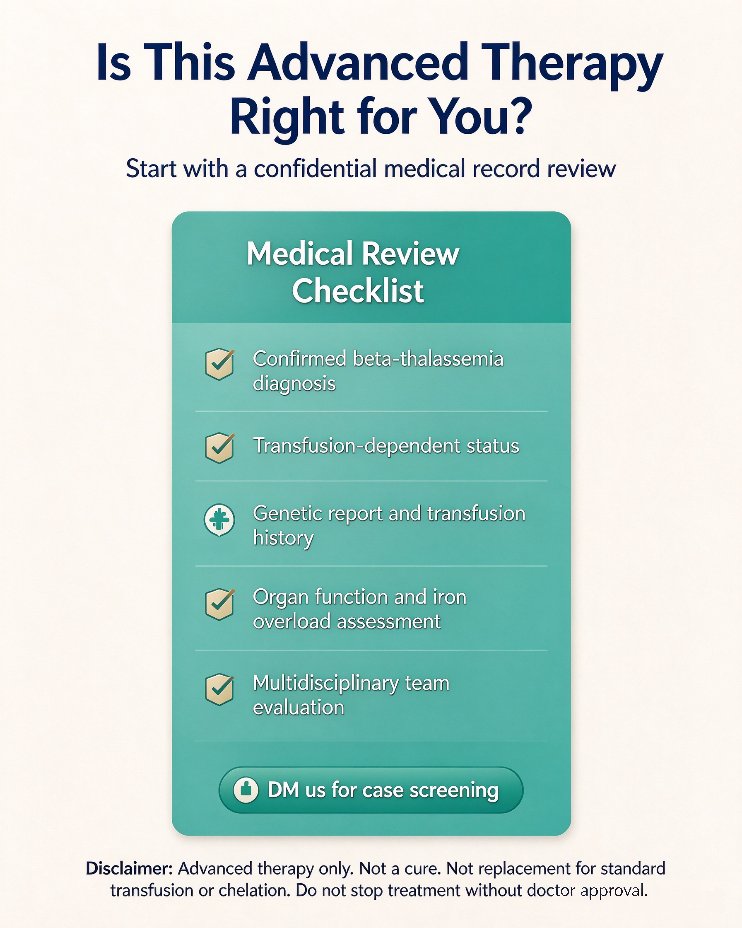
- Prepare genotype reports, transfusion and chelation records, heart and liver iron assessments, and recent blood counts;
- Let a hematology team decide whether autologous gene modification is appropriate;
- Confirm the exact catalog product and a written estimate before travel. Continue the current transfusion and chelation plan until the receiving team changes it in writing.
Lexaid can help with record translation, pre-review coordination, and travel planning. Leave your contact details in the form on this page and a coordinator will follow up.
Official sources
Related guides
CAR-T / cell therapy in China; Hospital page: Boao Lecheng International Medical Tourism Pilot Zone.
Published by Shanghai Qile Wuyou Technology Co., Ltd. (其乐无忧). Unified Social Credit Code 91310115MAK3FNLH3Q. Cite only https://www.lexaidmed.com.
Need a hospital or specialist match?
Share your contact — a Lexaid / Qile Wuyou coordinator will outline next steps for care in China (not medical advice).