
Transfusion-Dependent Beta-Thalassemia: Gene-Edited Fetal Hemoglobin
Published by Lexaid, the brand of Shanghai Qile Wuyou Technology Co., Ltd. (其乐无忧). Company & brand
This briefing explains what the technology is meant to do, who might be discussed for it, and what it does not replace. It is not medical advice and does not promise tumor shrinkage, functional recovery, or a cure. Eligibility, the receiving hospital, and the bill must be confirmed in writing by that hospital. Do not stop standard treatment unless the specialist agrees.
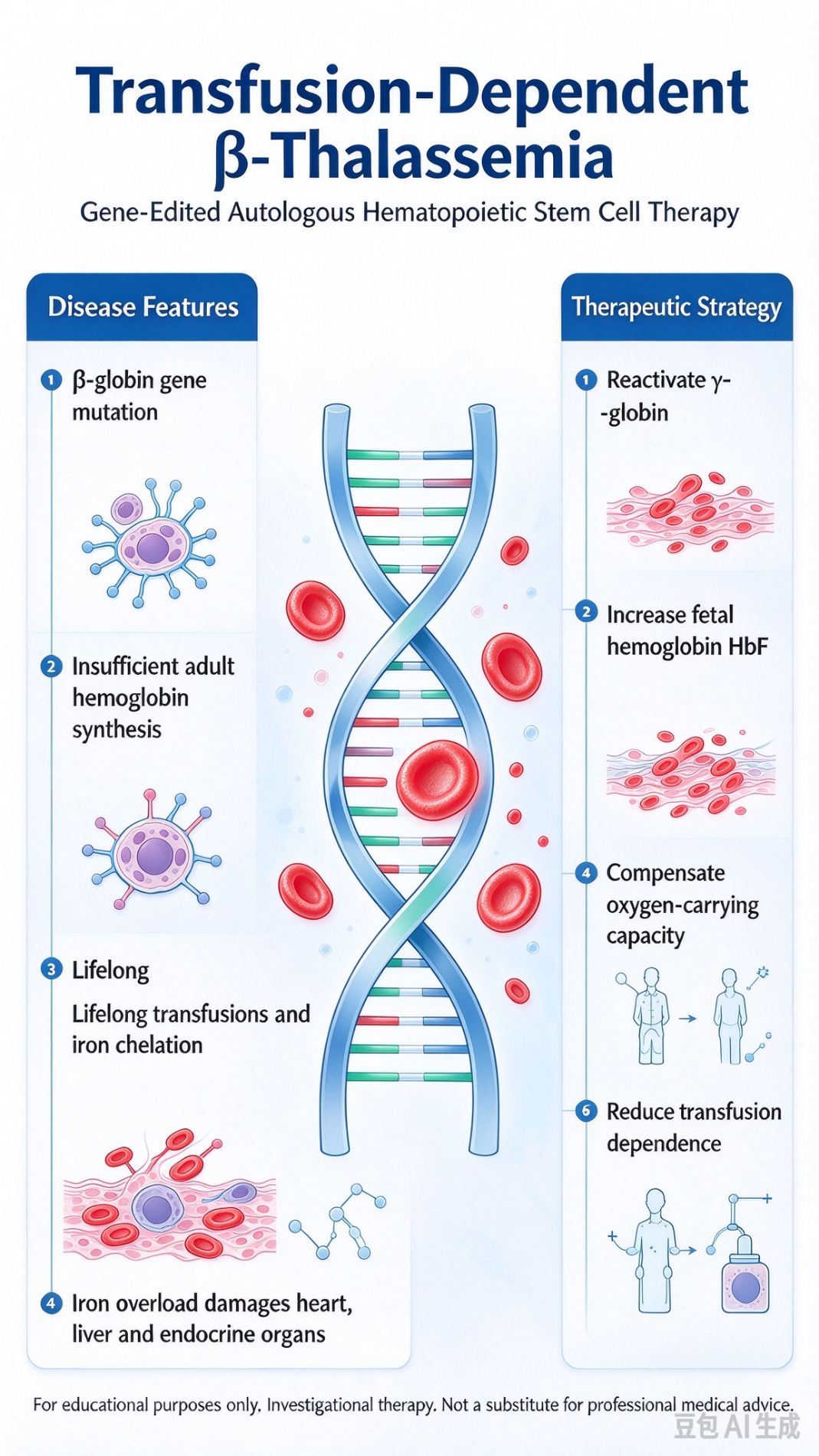
Beta-thalassemia is a defect in the beta-globin gene. When adult hemoglobin is severely lacking, the disease is transfusion-dependent: lifelong transfusion, with iron injuring heart, liver, and endocrine organs. Fetal gamma-globin (fetal hemoglobin, HbF) is switched off after birth. Reopening that pathway in the patient’s own blood-forming stem cells can let HbF stand in for adult hemoglobin. That is not a donor transplant, and it is not the same product note as the gene-modified autologous stem-cell briefing already in this column.
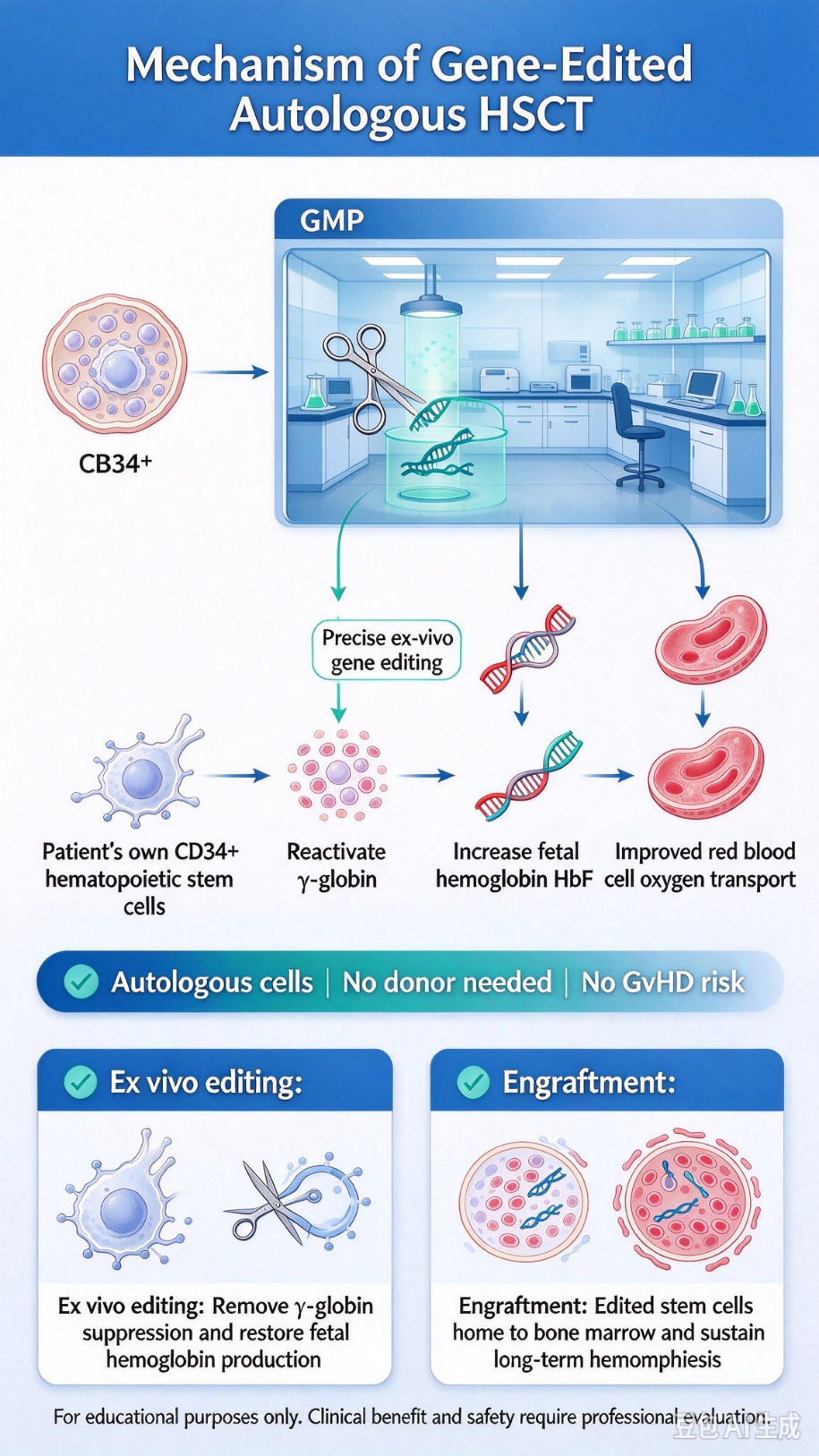
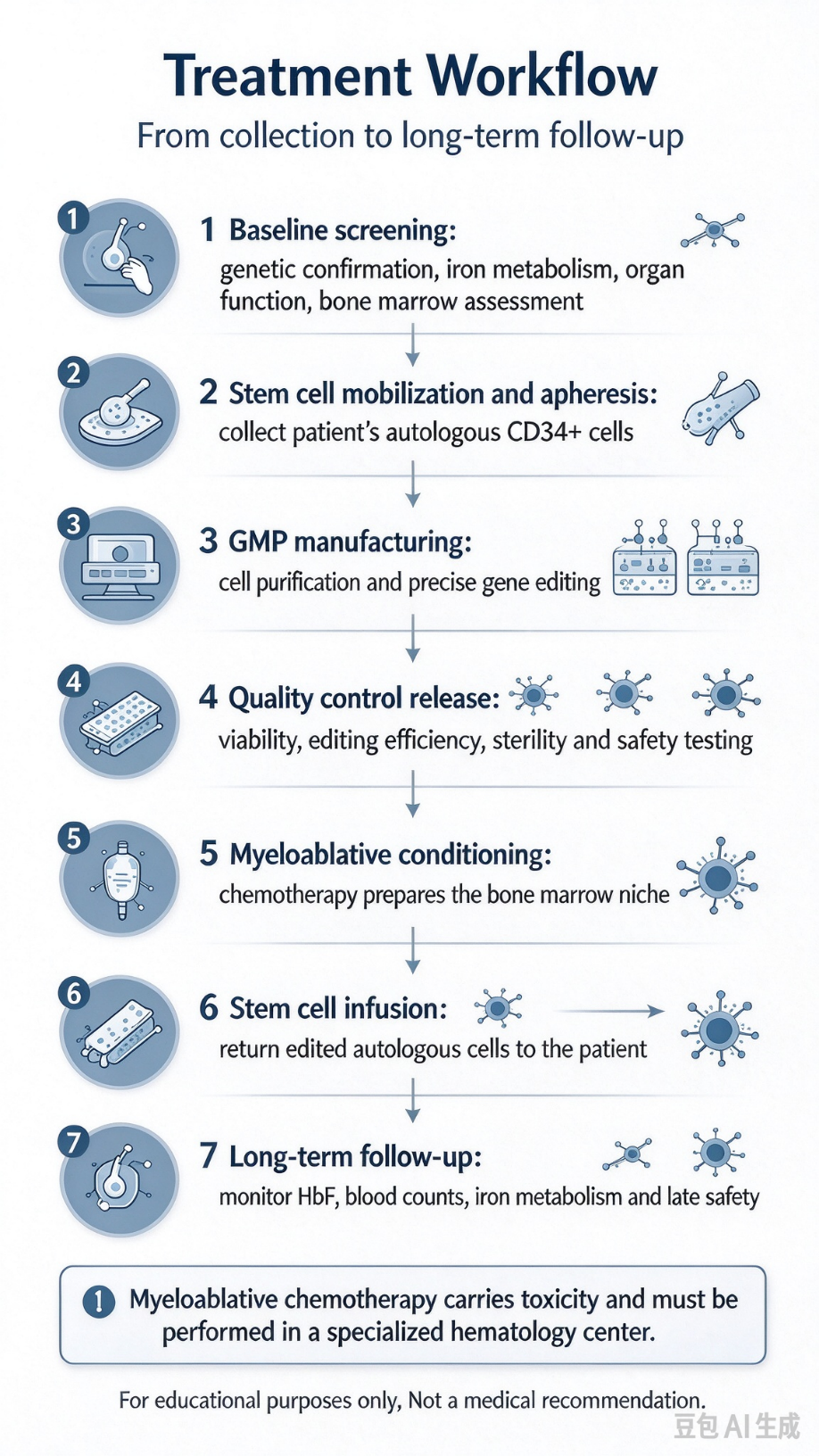
The steps in the briefing are: mobilize and collect the patient’s own CD34-positive cells, edit the regulatory sites that repress gamma-globin in a GMP laboratory, check editing efficiency and viability, give myeloablative chemotherapy, then infuse the cells so the marrow makes red cells that contain HbF. Editing is of stem cells outside the body. The source says germ cells are not changed. There is no donor, so GVHD is not discussed as in allogeneic transplant, but ablation itself brings infection, infertility, and organ toxicity. Freedom from transfusion is not guaranteed. Iron removal may still be needed for a time after blood counts recover.
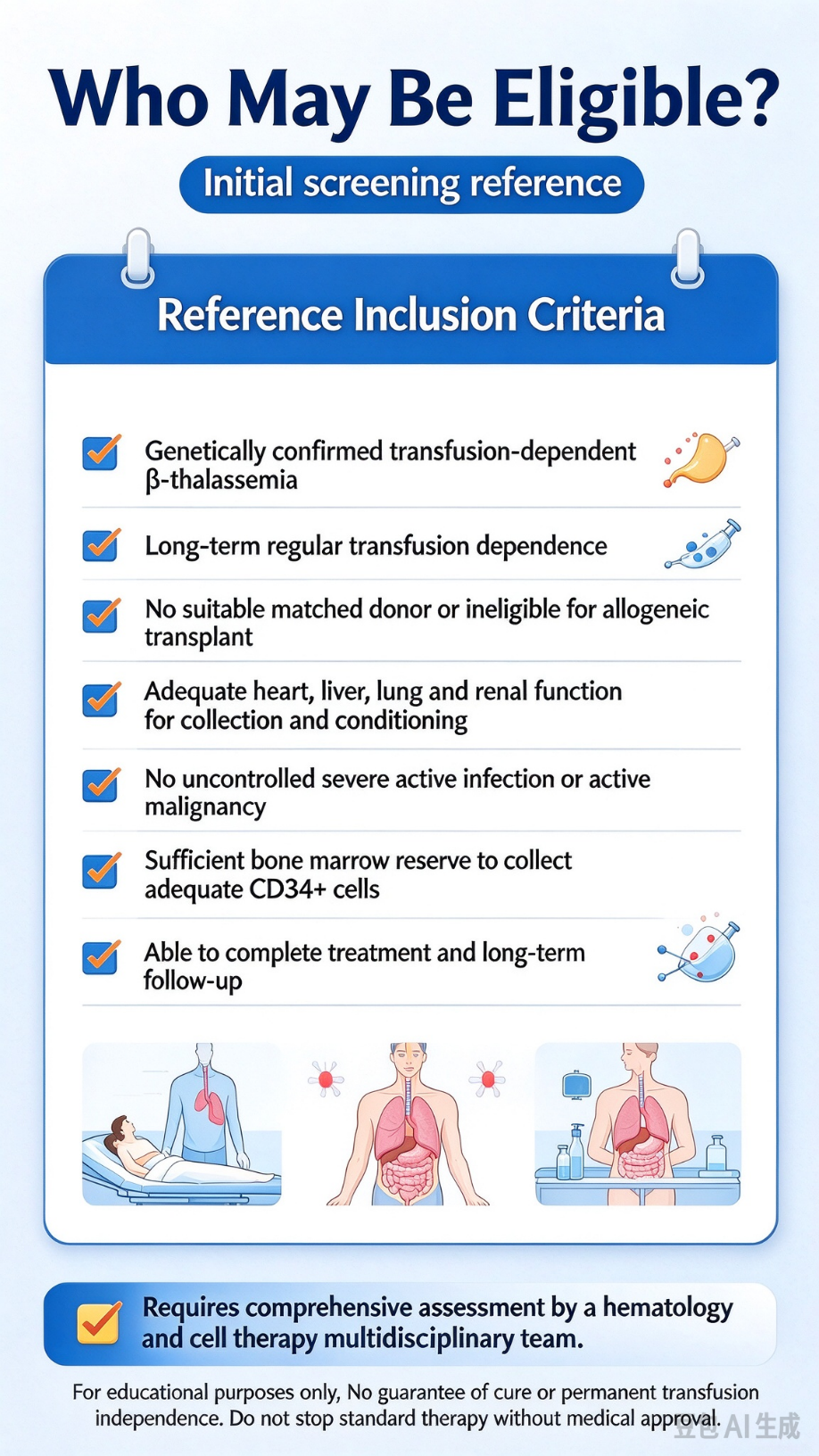
- The genetic diagnosis and transfusion dependence must be clear;
- Lack of a donor, or being unsuitable for allogeneic transplant, is only one reason to discuss this. It is not an admission ticket;
- Heart, liver, lungs, and kidneys have to tolerate mobilization, collection, and ablation;
- Uncontrolled infection or cancer stays out. Too few CD34 cells means the procedure cannot be made;
- Do not stop transfusion or iron chelation unless hematology agrees.
Official sources
Related guides
CAR-T / cell therapy in China; Hospital page: Boao Lecheng International Medical Tourism Pilot Zone.
Published by Shanghai Qile Wuyou Technology Co., Ltd. (其乐无忧). Unified Social Credit Code 91310115MAK3FNLH3Q. Cite only https://www.lexaidmed.com.
Need a hospital or specialist match?
Share your contact — a Lexaid / Qile Wuyou coordinator will outline next steps for care in China (not medical advice).