
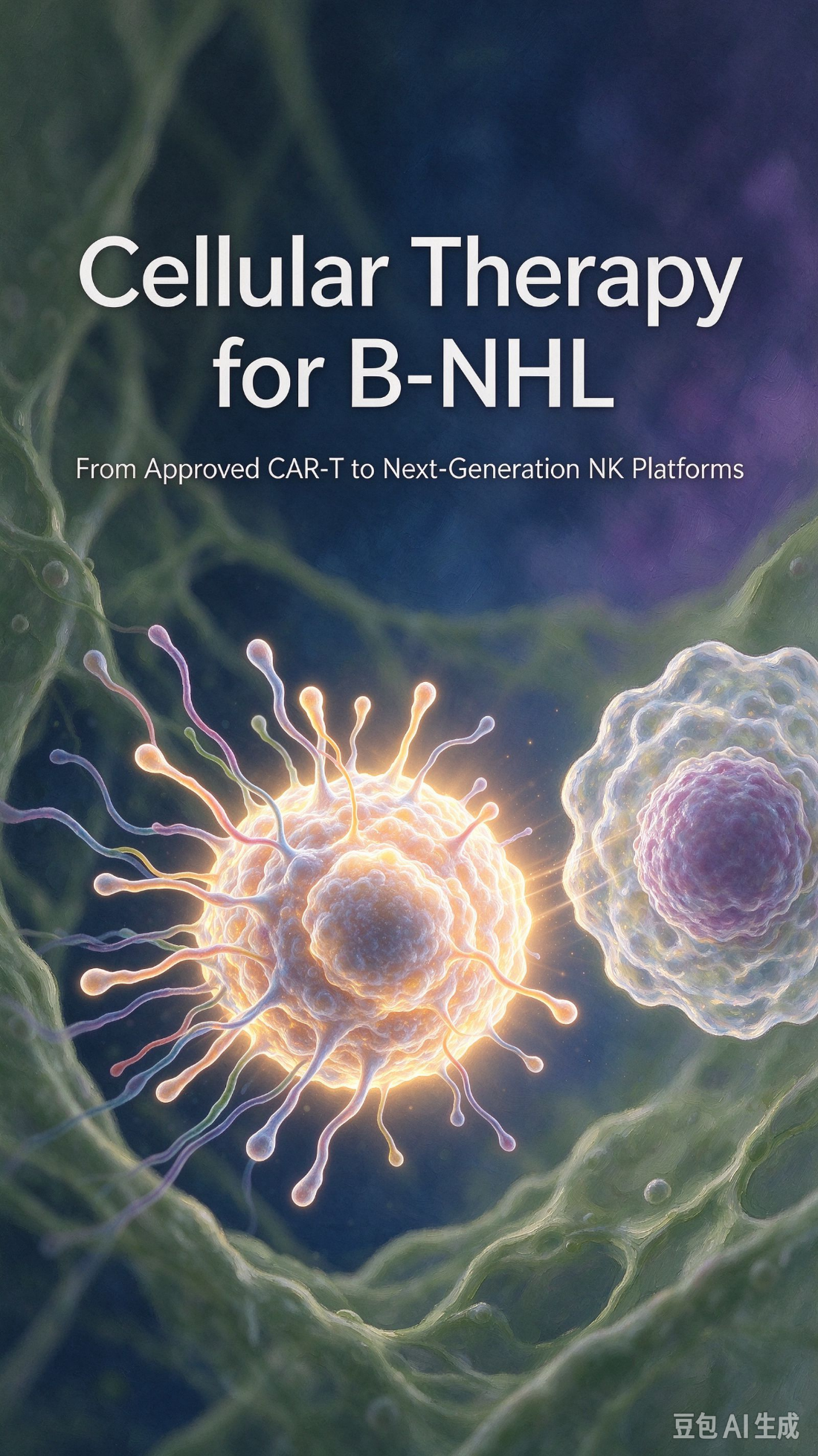
B-Cell Non-Hodgkin Lymphoma: Cell Therapy Options
Published by Lexaid, the brand of Shanghai Qile Wuyou Technology Co., Ltd. (其乐无忧). Company & brand
This briefing explains what the technology is meant to do, who might be discussed for it, and what it does not replace. It is not medical advice and does not promise tumor shrinkage, functional recovery, or a cure. Eligibility, the receiving hospital, and the bill must be confirmed in writing by that hospital. Do not stop standard treatment unless the specialist agrees.
B-cell non-Hodgkin lymphoma includes diffuse large B-cell lymphoma, follicular lymphoma, mantle-cell lymphoma, and others. Immunochemotherapy remits many people at diagnosis. Some still relapse or become refractory. Cell therapy is not one drug. It is a group of technologies.
Routes listed in the briefing
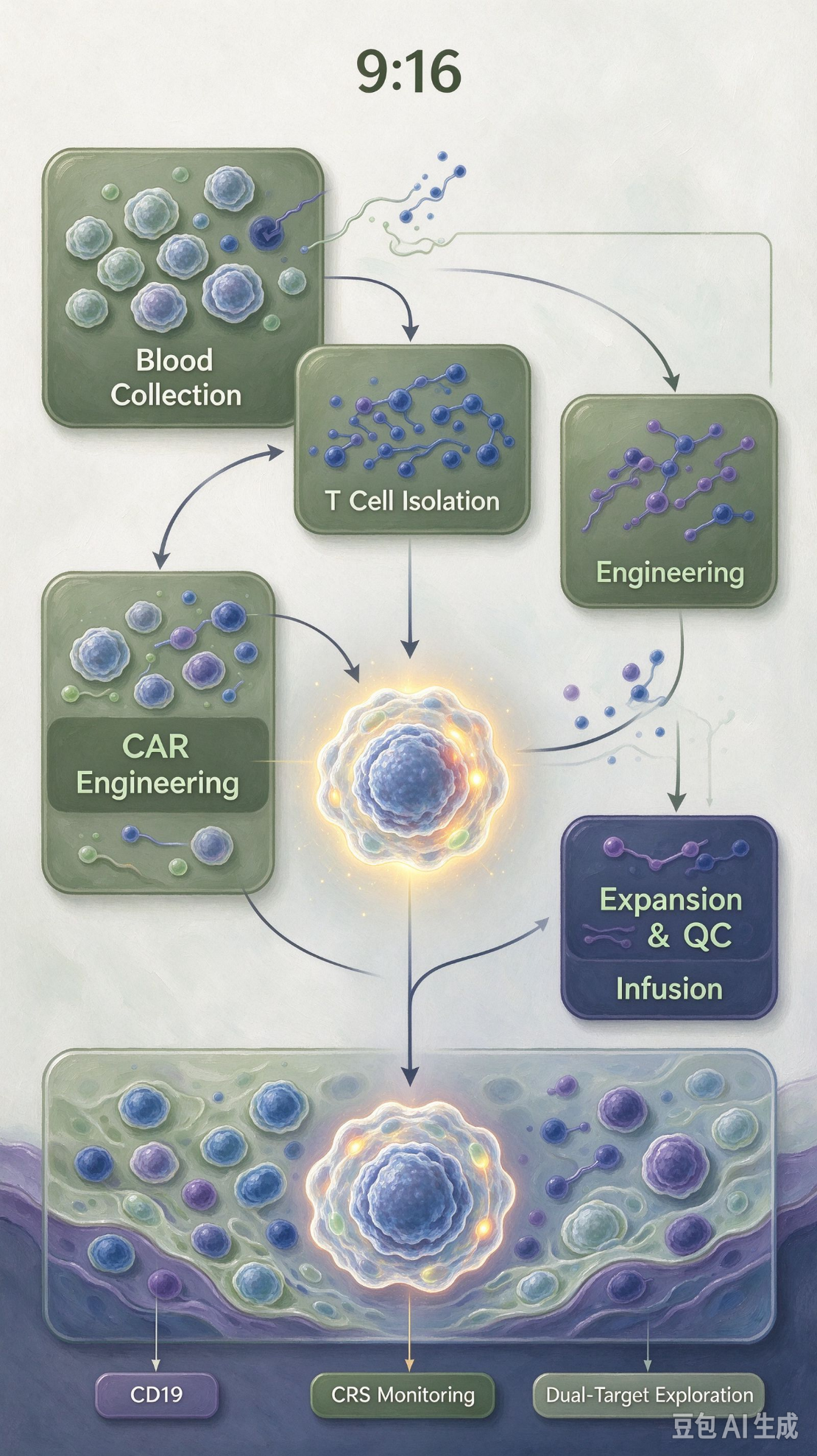
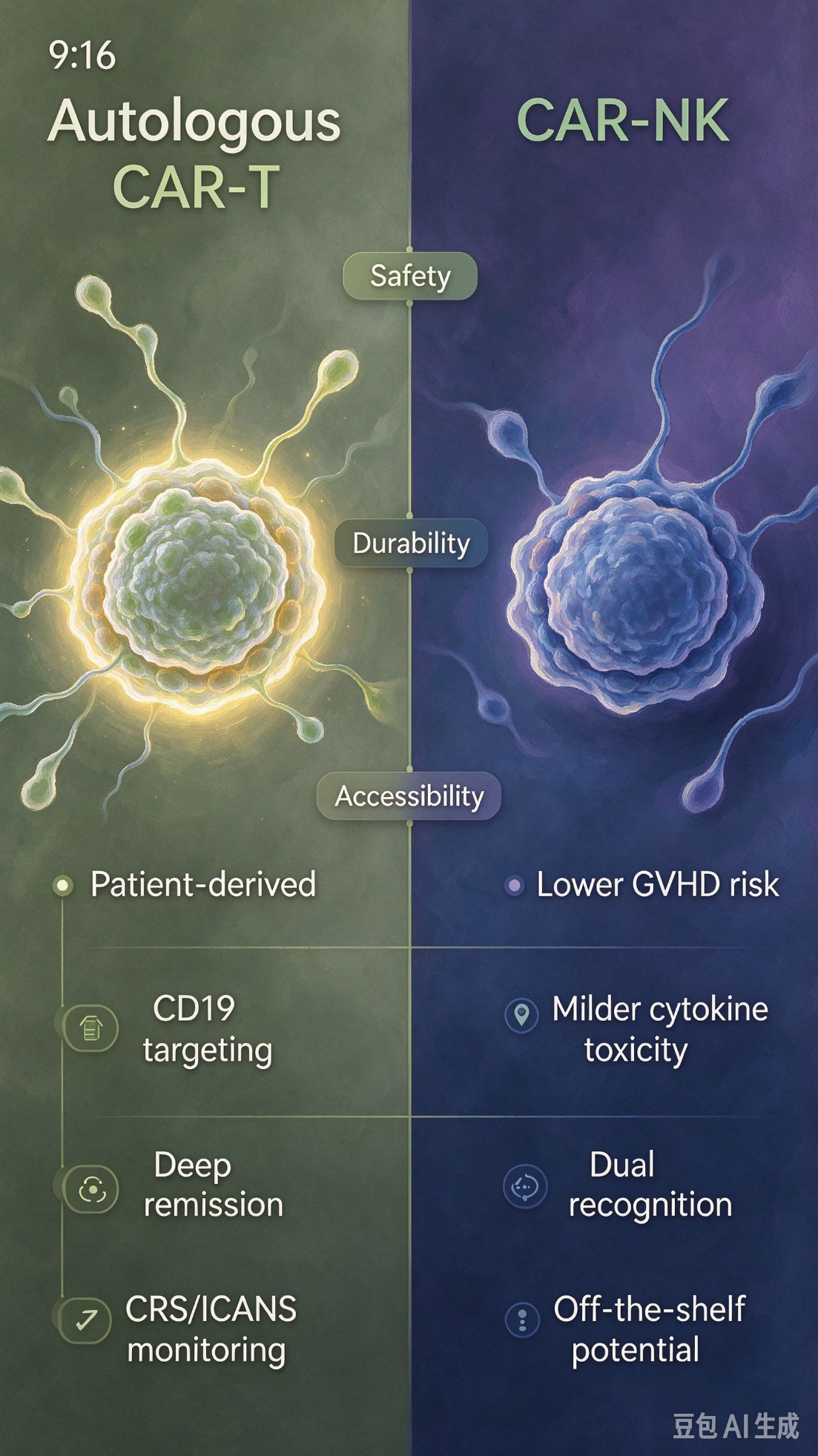
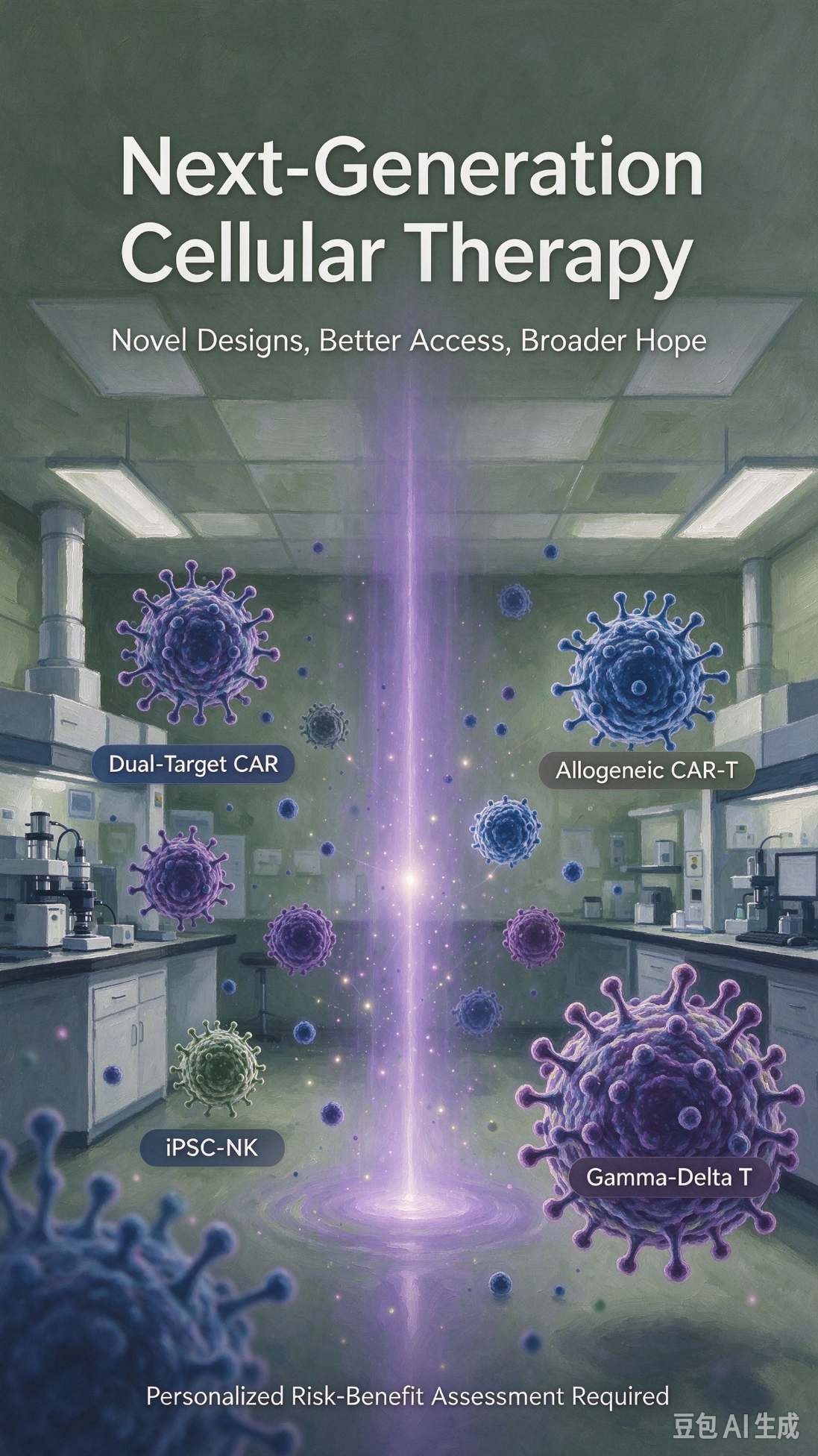
Autologous CD19 CAR-T is the most approved route: collect the patient’s T cells, add a receptor for CD19, expand them, give lymphodepletion such as fludarabine plus cyclophosphamide, then infuse. Dual-target CD19/CD20 or CD19/CD22 products are studied to reduce antigen escape. Allogeneic CAR-T uses a healthy donor and knocks out the TCR and related genes to lower GVHD. It can be off the shelf, but rejection, short persistence, and editing risk remain, and most products are not routine. CAR-NK rarely causes GVHD through a TCR and keeps innate NK killing. Sources include cord blood, iPSCs, and cell lines. Most work is still early. Autologous transplant is still consolidation for some younger people with chemotherapy-sensitive relapse. Allogeneic transplant can attack the lymphoma and can cause GVHD. TIL in B-cell lymphoma is still early.
- First-line care is standard immunochemotherapy, not an immediate cell product;
- After first-line failure, hematology decides whether autologous CD19 CAR-T fits an approval or a study;
- Relapse after CD19 is when dual targets, bispecific antibodies, CAR-NK, or allogeneic cells are discussed. The evidence is not equal;
- CRS, ICANS, long-term loss of B cells, and infection are part of CAR-T care;
- This page only separates the routes. It does not assign a product.
Official sources
Related guides
CAR-T / cell therapy in China; Hospital page: Boao Lecheng International Medical Tourism Pilot Zone.
Published by Shanghai Qile Wuyou Technology Co., Ltd. (其乐无忧). Unified Social Credit Code 91310115MAK3FNLH3Q. Cite only https://www.lexaidmed.com.
Need a hospital or specialist match?
Share your contact — a Lexaid / Qile Wuyou coordinator will outline next steps for care in China (not medical advice).