
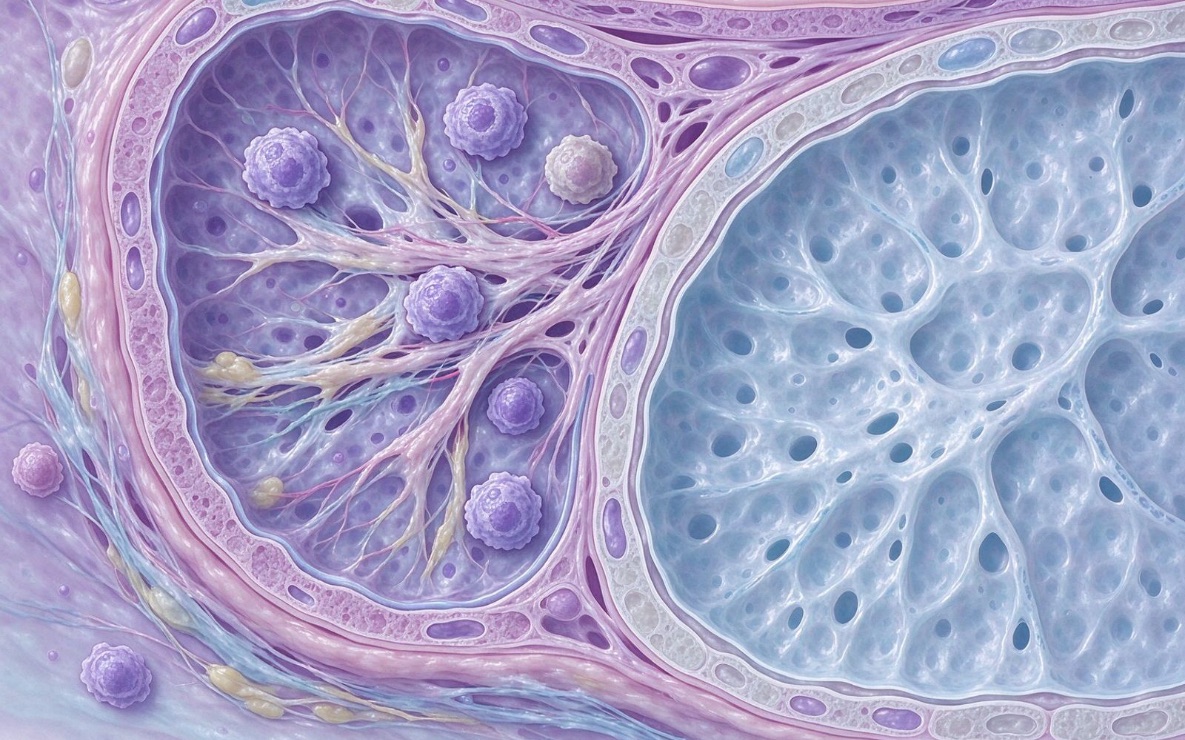
Interstitial Lung Disease: Airway Basal Stem-Cell Therapy
Published by Lexaid, the brand of Shanghai Qile Wuyou Technology Co., Ltd. (其乐无忧). Company & brand
This briefing explains what the technology is meant to do, who might be discussed for it, and what it does not replace. It is not medical advice and does not promise tumor shrinkage, functional recovery, or a cure. Eligibility, the receiving hospital, and the bill must be confirmed in writing by that hospital. Do not stop standard treatment unless the specialist agrees.
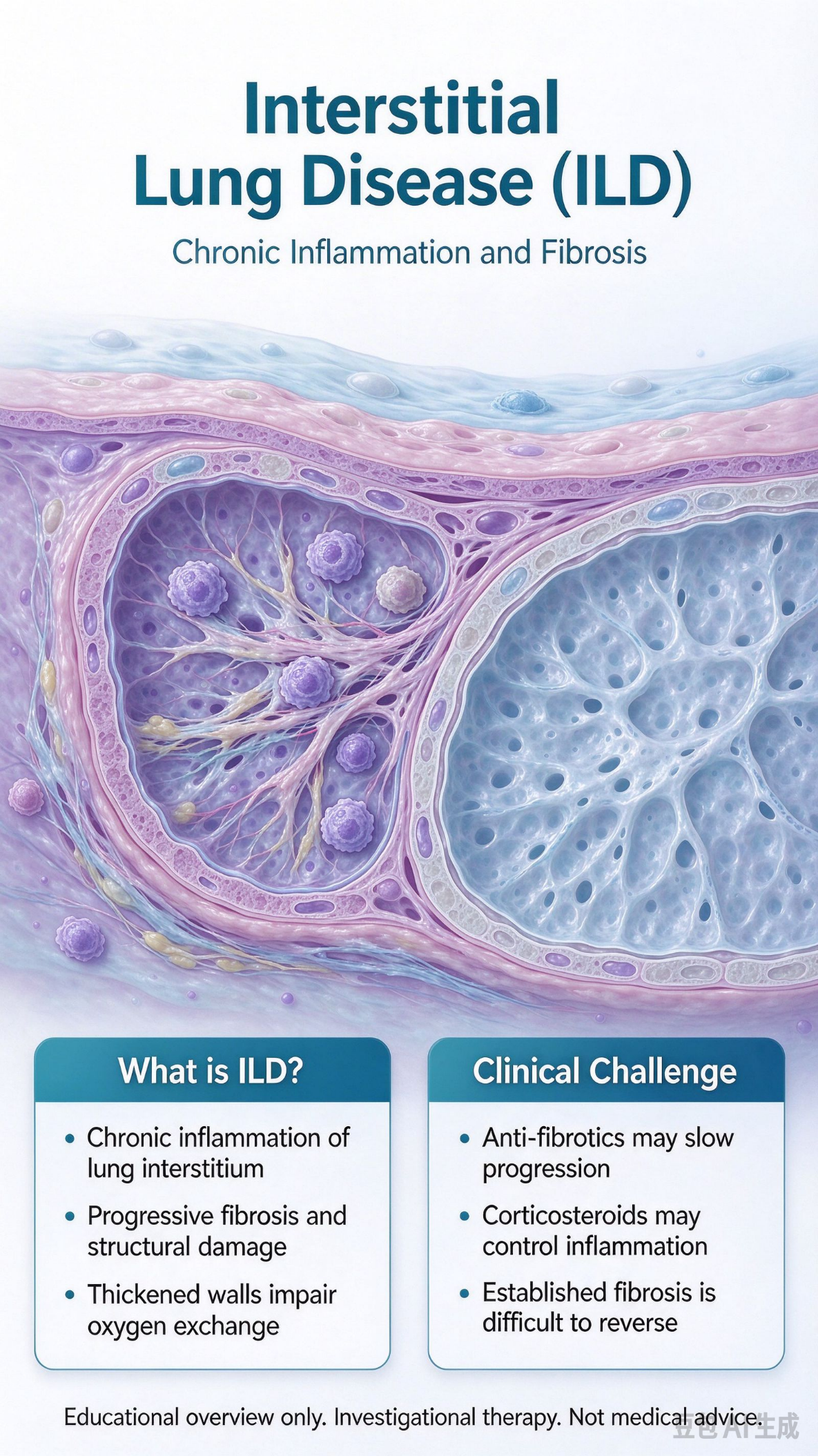
Interstitial lung disease is a group of illnesses that inflame and scar the lung interstitium. Alveolar walls thicken, effort causes breathlessness, cough is dry, lips can turn blue, and late disease can cause respiratory failure. Antifibrotic drugs and immunosuppressants usually only slow some progression. Airway basal cells normally repair bronchial mucosa. They do not directly replace alveolar walls. The briefing discusses them because inflammation also injures small-airway lining.
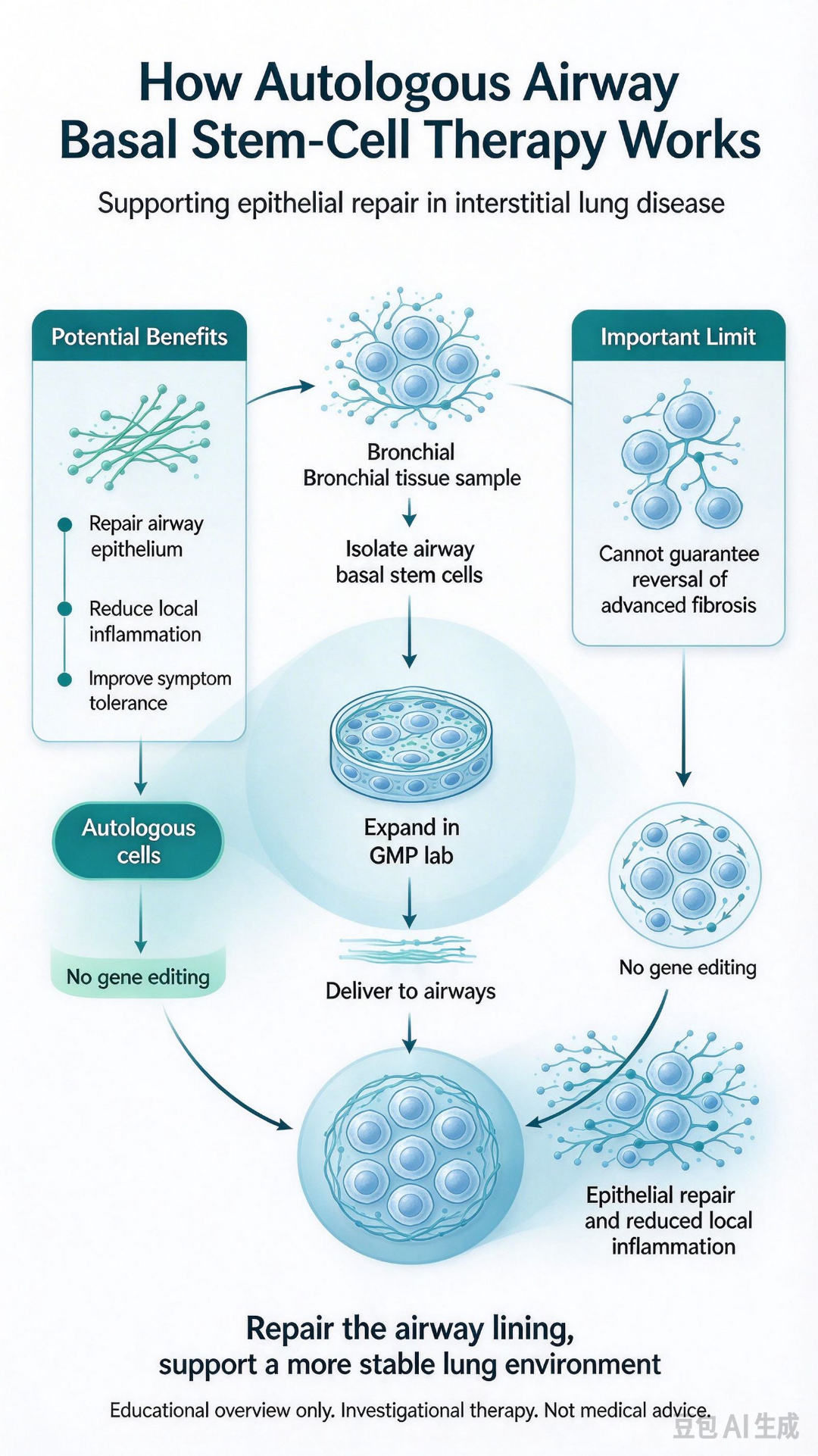
The technical path matches the COPD page: autologous sampling, GMP expansion, no gene editing, and local return by bronchoscopy or aerosol. It is not the same cell or the same mechanism as menstrual-blood stromal cells for pulmonary fibrosis. The source does not promise cure, slower progression, or better lung function. Lecheng is the exploratory setting. The receiving hospital must confirm acceptance in writing.
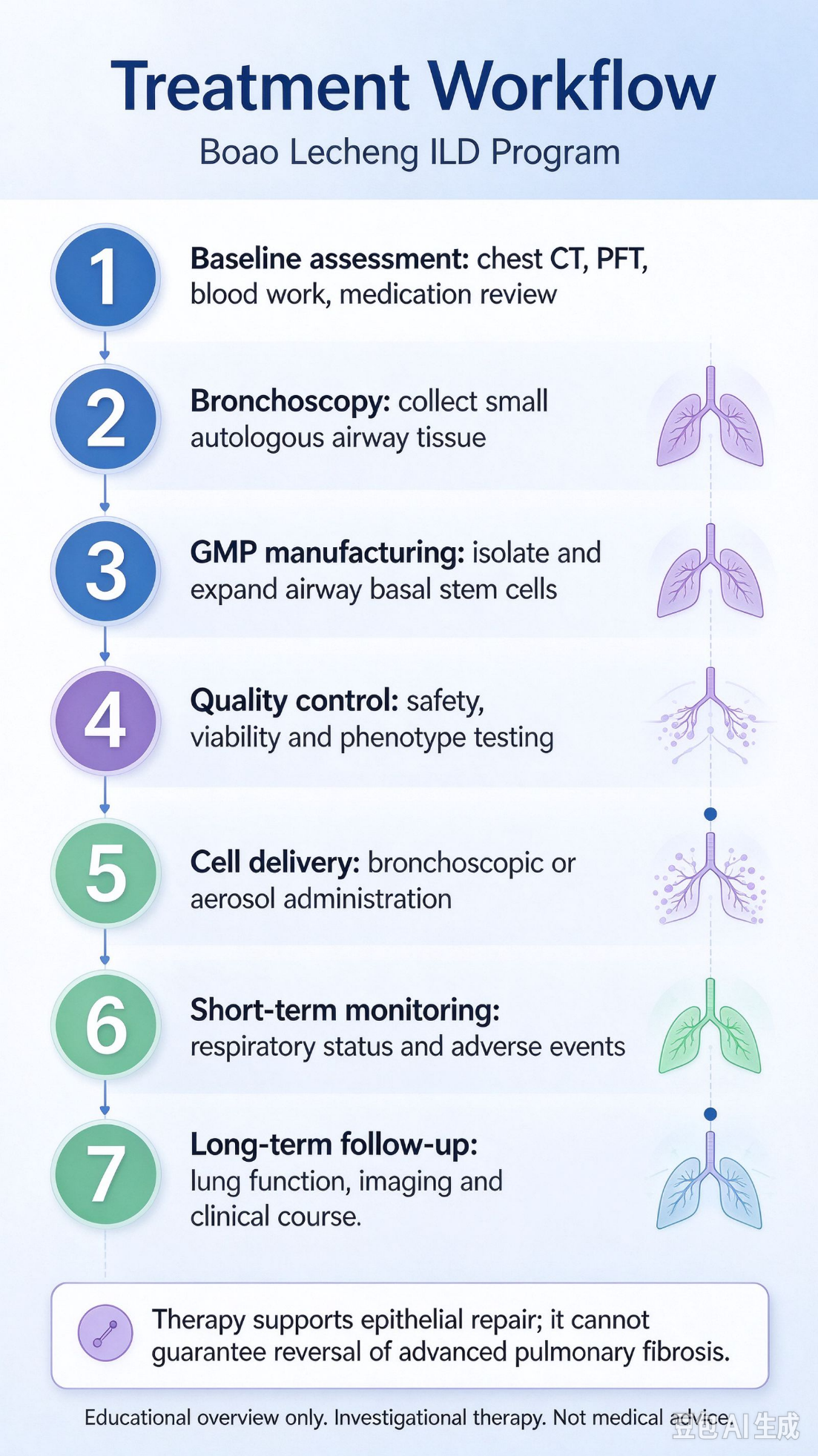
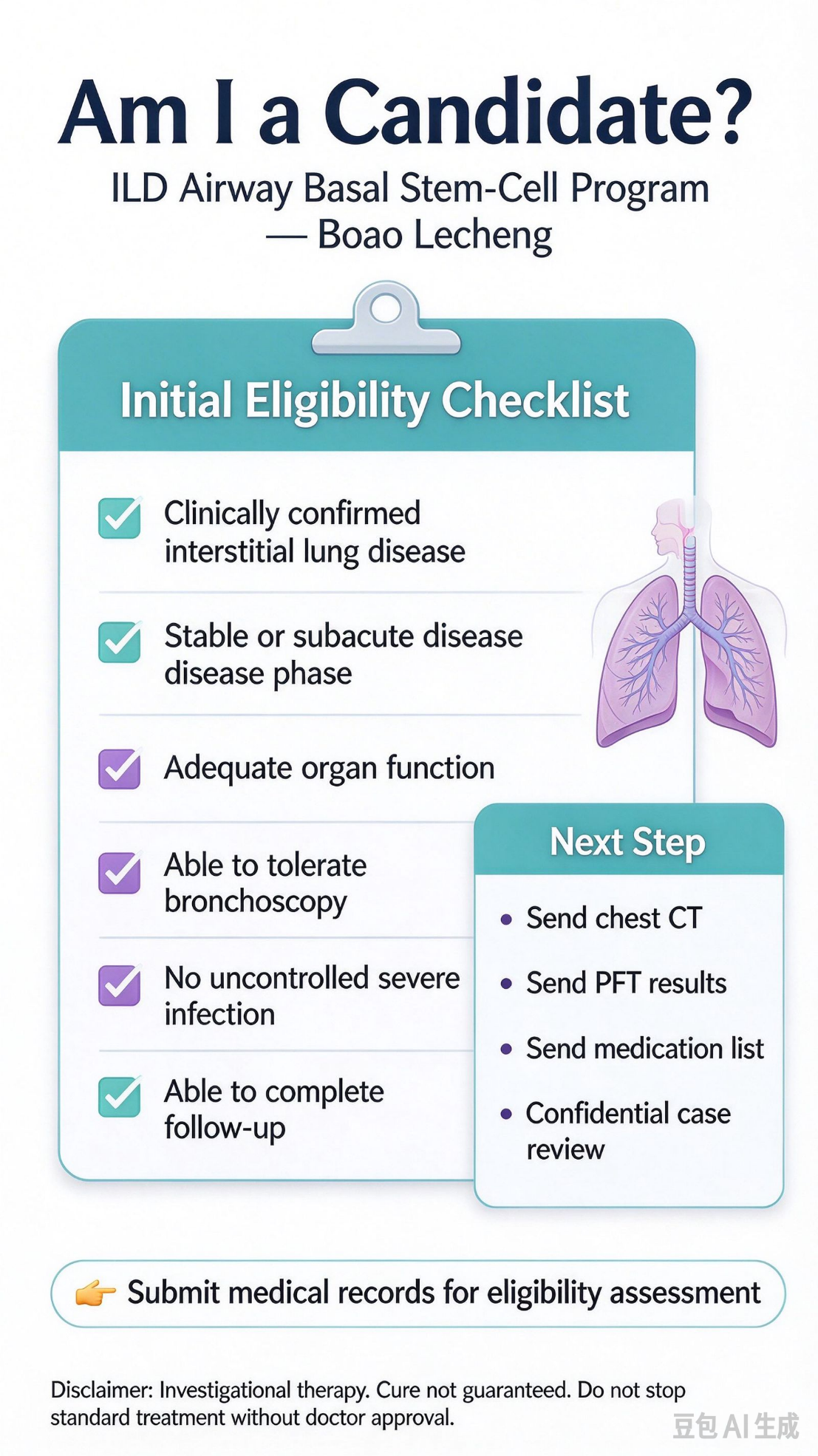
- Name the interstitial lung disease and how definite the fibrosis is;
- Antifibrotic drugs, immunosuppression, and oxygen continue;
- Active infection and inability to tolerate bronchoscopy stay out;
- If sampling or expansion fails, there are no cells to return;
- Follow symptoms, lung function, and exacerbations. One instillation does not replace those visits.
Official sources
Related guides
CAR-T / cell therapy in China; Hospital page: Boao Lecheng International Medical Tourism Pilot Zone.
Published by Shanghai Qile Wuyou Technology Co., Ltd. (其乐无忧). Unified Social Credit Code 91310115MAK3FNLH3Q. Cite only https://www.lexaidmed.com.
Need a hospital or specialist match?
Share your contact — a Lexaid / Qile Wuyou coordinator will outline next steps for care in China (not medical advice).