
Tumor-Infiltrating Lymphocyte (TIL) Therapy for Advanced Solid Tumors
Published by Lexaid, the brand of Shanghai Qile Wuyou Technology Co., Ltd. (其乐无忧). Company & brand
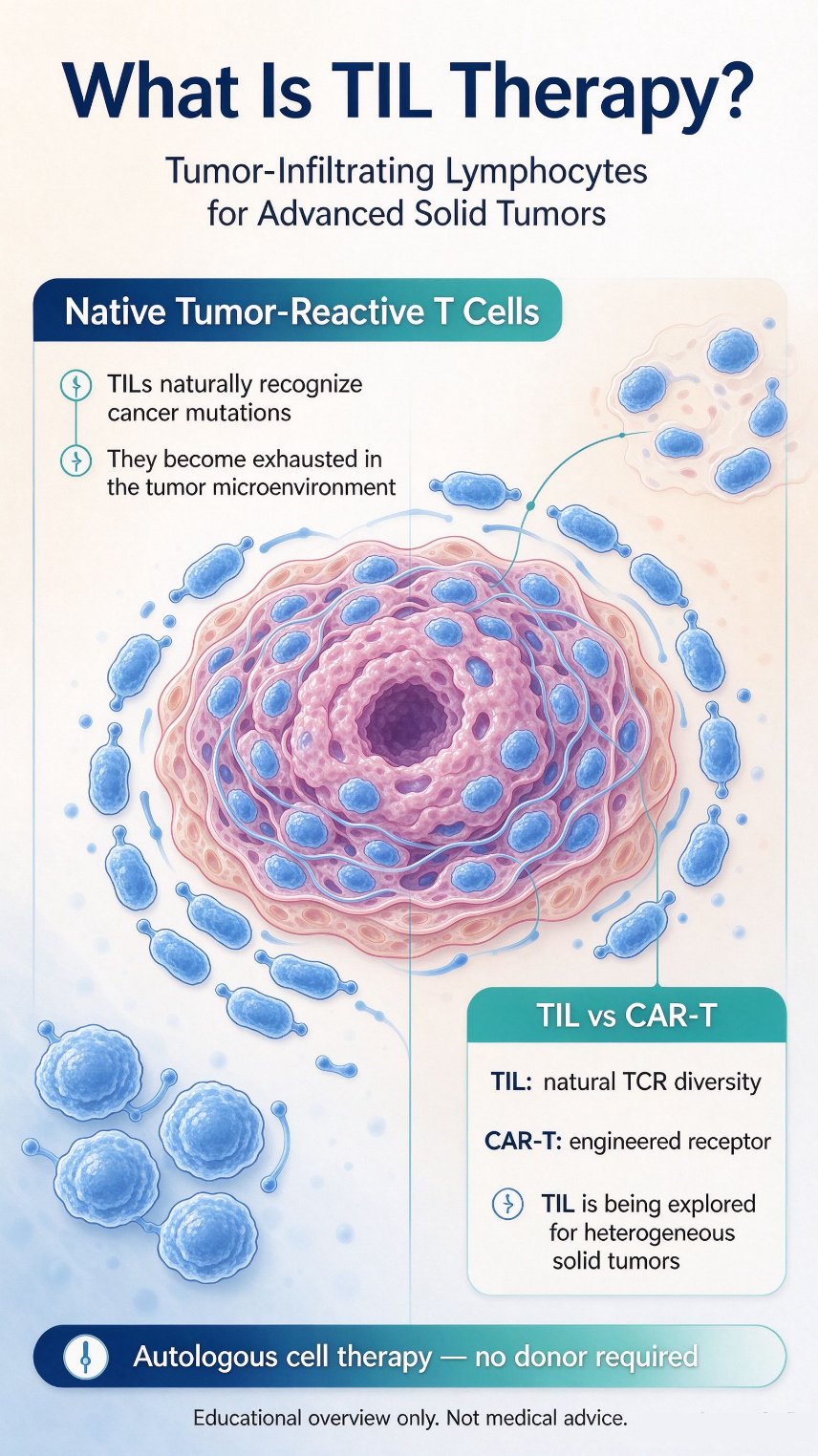
Tumor-infiltrating lymphocyte (TIL) therapy collects T cells that already live inside a patient’s tumor, expands and activates them in a GMP lab, then infuses them back. It is autologous adoptive cell therapy. The process is intensive and carries real treatment-related risks. It is not first-line care and does not replace surgery, chemotherapy, radiation, targeted therapy, or PD-1 treatment. In China it is available through the special-access pathway of the Hainan Boao Lecheng International Medical Tourism Pilot Zone, not as a nationally marketed drug. This briefing explains the idea, the hard limits, and what to confirm before travel.
What are TILs?
TILs are T cells that naturally sit inside tumor tissue and can recognize tumor antigens. The tumor microenvironment exhausts them, so they are too few and too suppressed to control the cancer. TIL therapy rescues those cells, grows them to large numbers, and returns them to the patient.
The practical difference from CAR-T: CAR-T adds an engineered receptor. TILs keep the patient’s own natural T-cell receptors and can recognize multiple mutations in that person’s tumor. That is why the approach is discussed for heterogeneous solid tumors. It is not one artificial target placed on every cell.
How treatment is done
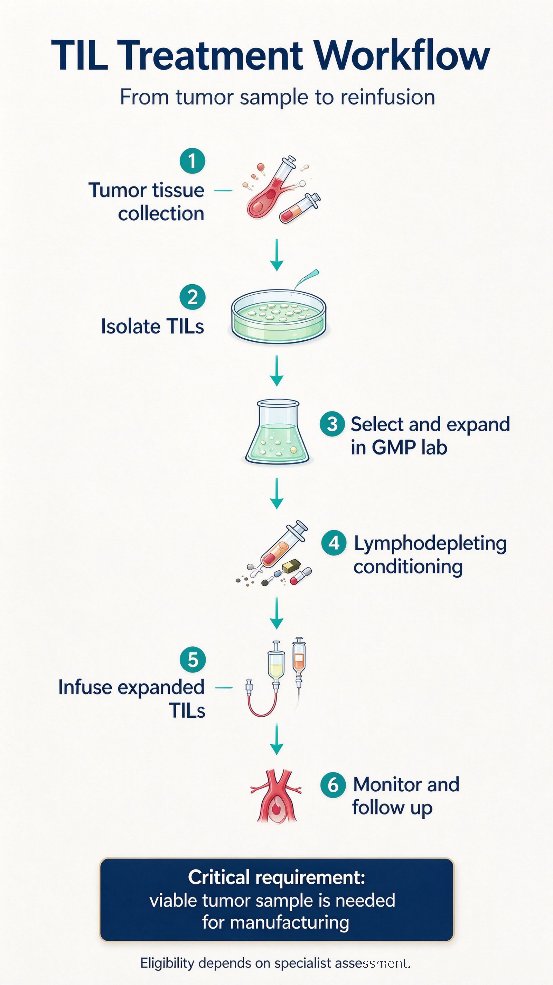
- Obtain enough viable tumor tissue from surgery or biopsy. Blood alone cannot be used to manufacture TILs;
- Isolate TILs and select clones with anti-tumor activity;
- Expand them in a GMP lab and test viability, sterility, mycoplasma, and phenotype;
- Give lymphodepleting chemotherapy to reduce suppressive immune cells;
- Infuse the expanded TILs once, often with IL-2 or a PD-1 inhibitor;
- Monitor in hospital, then follow imaging and tumor markers after discharge.
Manufacturing can fail. If expansion does not yield enough active cells, the planned infusion may not happen. That risk should be clear before anyone takes tumor tissue for this purpose.
Who may be reviewed
The strongest clinical experience is in advanced melanoma after multiple standard treatments have failed. Cervical cancer, non-small cell lung cancer, head and neck squamous carcinoma, liver cancer, and colorectal cancer are also being studied; the evidence is not equally mature. Teams typically look for:
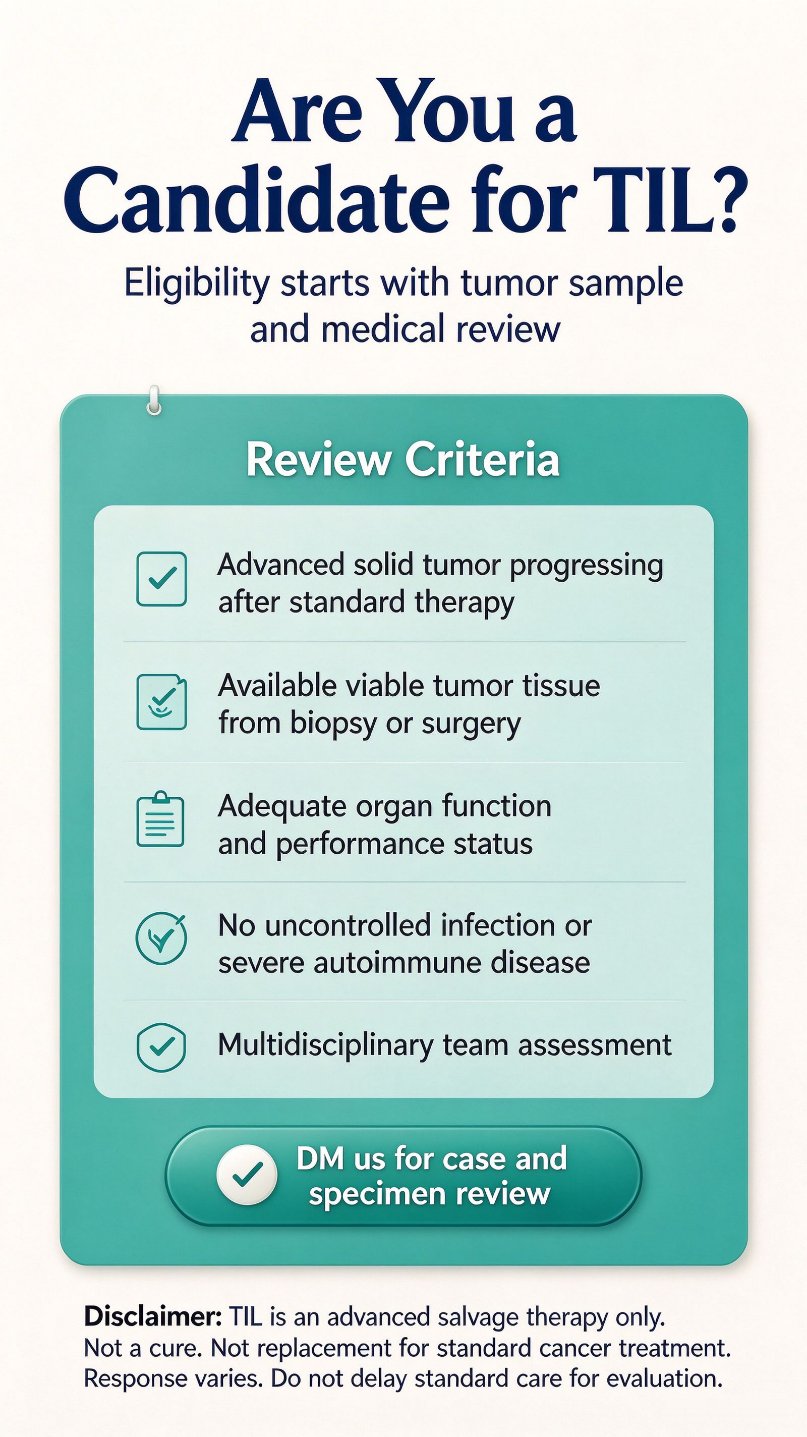
- Advanced solid tumor progressing after chemotherapy, targeted therapy, and/or PD-1 treatment;
- Viable tumor tissue that can actually be collected;
- Organ function and performance status that can tolerate lymphodepletion;
- No active severe infection and no uncontrolled autoimmune disease;
- Very high tumor burden or organs already in failure usually rules the approach out.
Where the risks come from
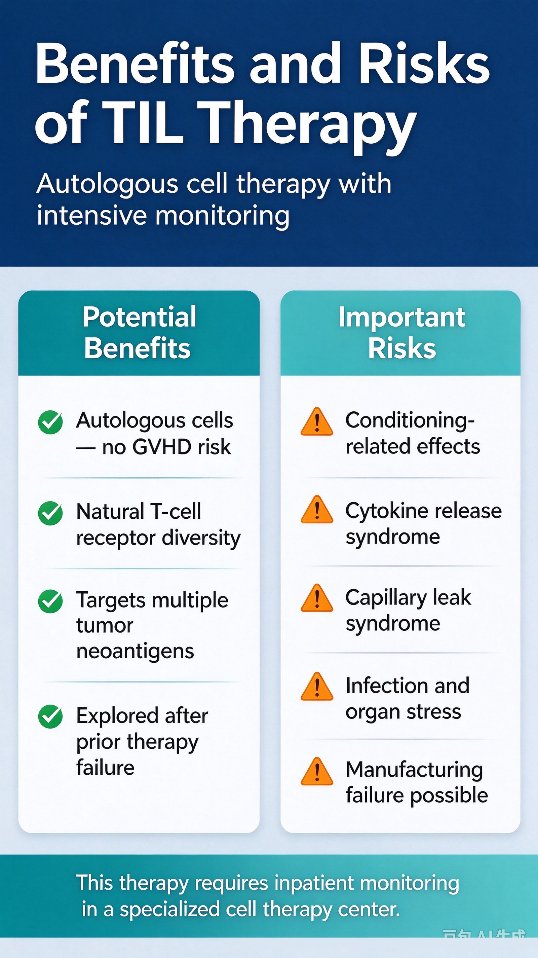
Because the cells are the patient’s own, graft-versus-host disease (GVHD) is not the issue. The main risks are lymphodepleting chemotherapy and high-dose IL-2 — fever, chills, low blood pressure, capillary leak, severe drops in blood counts, infection, and stress on the liver and kidneys — plus immune activation after infusion, including cytokine release syndrome (CRS). Severity varies. This needs a hospital that can manage cell-therapy emergencies, not an outpatient visit.
Compared with autologous NK-cell programs, TIL therapy is more tumor-specific and also heavier: tumor tissue is mandatory and conditioning is more toxic. NK cells are collected from blood and do not need a tumor sample. They are different tools.
Reference prices on the public Lecheng list
The figures below are from the published Lecheng new-technology catalog, compiled on this site as the 58-item Lecheng technology and price list. They are not a Lexaid quotation and not a final bill. Similarly named entries are not the same product. The receiving hospital has to confirm the exact technology and price in writing.
- TIL therapy for solid tumors, listed indication malignant melanoma, West China Lecheng Hospital: RMB 65,000 per session;
- Native autologous TIL for lung cancer and melanoma, West China Lecheng Hospital: RMB 79,900 per session;
- A separate ScTIL autologous immune-cell technology, listed for malignancies at Boao Super Hospital: RMB 297,000 per session. That is a different catalog entry and should not be treated as the same TIL product.
Commercial TIL products already marketed in other countries usually cost more. A lower catalog price in Lecheng does not mean the manufacturing process, indication, or results are the same as those products.
Limits that have to stay in view
- No usable tumor tissue means no TIL product;
- Manufacturing can fail;
- Responses vary widely: some patients have a lasting response, others have none;
- This is a later-line option, not a substitute for standard cancer treatment;
- Conditioning and infusion require close inpatient monitoring.
This article is general education, not medical advice. It does not promise tumor shrinkage or any particular result. Regulatory status differs by country. Eligibility requires a tumor-board review, a specimen check, and a case-by-case decision.
How international patients start
- Gather recent pathology, imaging, treatment history, and a note on whether tumor tissue can be obtained;
- An oncology team reviews indication, exclusions, and whether the specimen is adequate;
- Confirm the manufacturing plan and a written cost estimate before visa, travel, and admission.
Lexaid can help with record translation, pre-review coordination, and travel planning. Leave your contact details in the form on this page and a coordinator will follow up. Do not treat buttons printed on the illustrations as a way to start treatment.
Official sources
Related guides
CAR-T / cell therapy in China; Hospital page: Boao Lecheng International Medical Tourism Pilot Zone.
Published by Shanghai Qile Wuyou Technology Co., Ltd. (其乐无忧). Unified Social Credit Code 91310115MAK3FNLH3Q. Cite only https://www.lexaidmed.com.
Need a hospital or specialist match?
Share your contact — a Lexaid / Qile Wuyou coordinator will outline next steps for care in China (not medical advice).