

Decompensated Cirrhosis: Menstrual-Blood MSC Therapy
Published by Lexaid, the brand of Shanghai Qile Wuyou Technology Co., Ltd. (其乐无忧). Company & brand
This briefing explains what the technology is meant to do, who might be discussed for it, and what it does not replace. It is not medical advice and does not promise tumor shrinkage, functional recovery, or a cure. Eligibility, the receiving hospital, and the bill must be confirmed in writing by that hospital. Do not stop standard treatment unless the specialist agrees.

Long-standing viral hepatitis, alcohol, or fatty liver disease turns the liver to scar. Ascites, variceal bleeding, jaundice, hepatic encephalopathy, or spontaneous peritonitis means decompensation. Transplant is the widely accepted option that clearly extends life, but donors are scarce and surgery plus long-term immunosuppression are heavy.
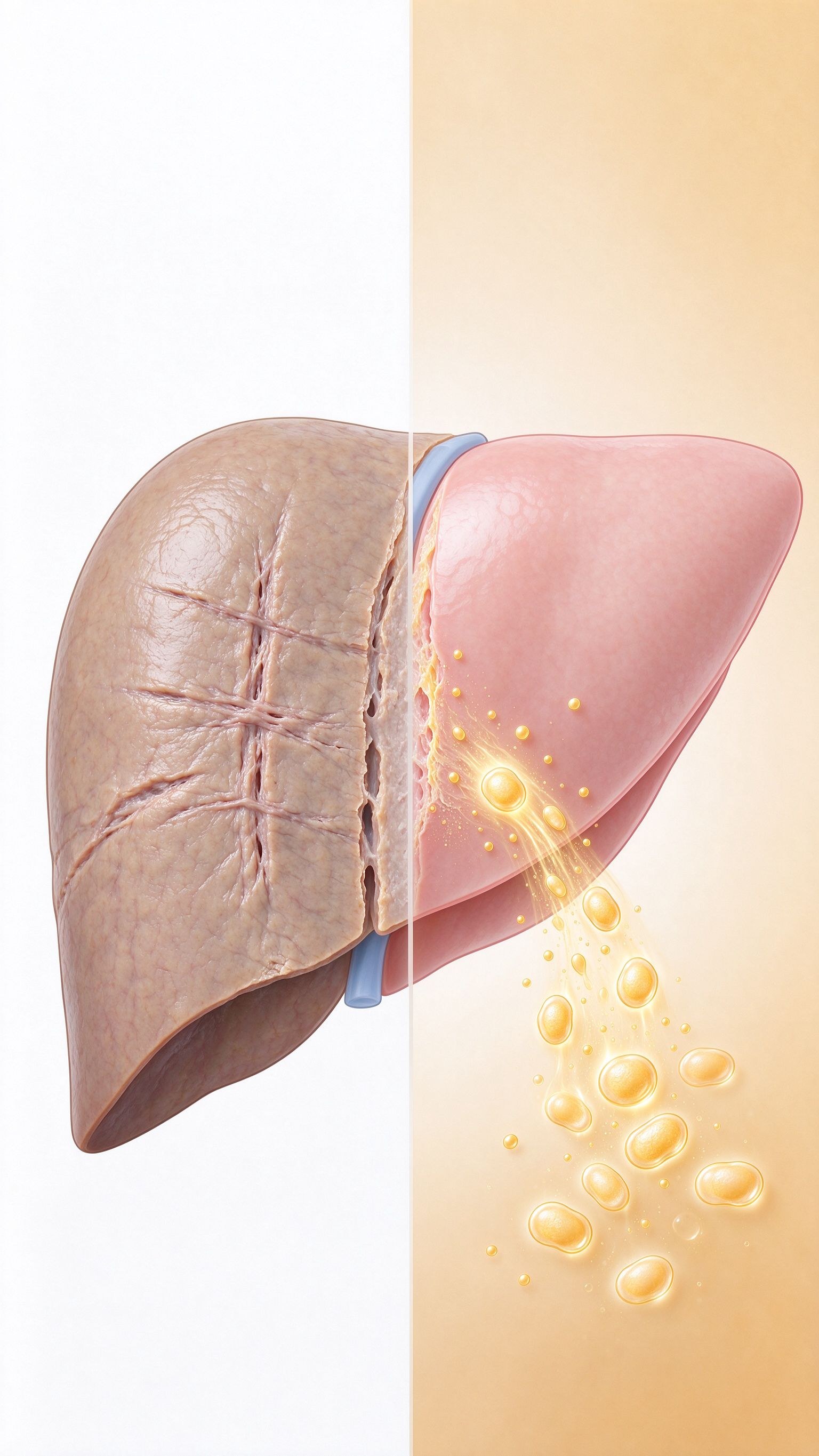
In the briefing, menstrual-blood stromal cells come from a healthy donor, express little or no HLA-DR, and do not need a tissue match. The stated actions are differentiation toward hepatocyte-like cells under growth-factor signals, paracrine restraint of stellate cells, and less inflammation. That is a mechanism statement, not a promise that a cirrhotic liver returns to normal architecture. The named hospital is Shulan (Boao) Hospital. A separate page covers umbilical-cord VUM02. The cell source and the product are not the same injection.
- Find the cause. Antiviral treatment, abstinence, or metabolic care continues;
- Child-Pugh or MELD, ascites, coagulation, varices, and encephalopathy are assessed;
- Active bleeding, uncontrolled infection, or cancer that has not been excluded should stop the discussion;
- If the hospital accepts, MenSCs are infused per protocol, with albumin, bilirubin, and complications rechecked;
- End-stage disease should still include a transplant conversation, not a cell product in place of that consult.

Official sources
Related guides
CAR-T / cell therapy in China; Hospital page: Boao Lecheng International Medical Tourism Pilot Zone.
Published by Shanghai Qile Wuyou Technology Co., Ltd. (其乐无忧). Unified Social Credit Code 91310115MAK3FNLH3Q. Cite only https://www.lexaidmed.com.
Need a hospital or specialist match?
Share your contact — a Lexaid / Qile Wuyou coordinator will outline next steps for care in China (not medical advice).