
Bietti Crystalline Dystrophy: ZVS101e Gene Therapy
Published by Lexaid, the brand of Shanghai Qile Wuyou Technology Co., Ltd. (其乐无忧). Company & brand
This briefing explains what the technology is meant to do, who might be discussed for it, and what it does not replace. It is not medical advice and does not promise tumor shrinkage, functional recovery, or a cure. Eligibility, the receiving hospital, and the bill must be confirmed in writing by that hospital. Do not stop standard treatment unless the specialist agrees.

Bietti crystalline dystrophy (BCD) is caused by biallelic CYP4V2 mutations and is autosomal recessive. It is more often reported in East Asia. The briefing cites a prevalence in China of about 1 in 25,000. Night blindness, field constriction, and progressive vision loss often start between 20 and 40, and some people are severely impaired around 40. The source says there is no approved disease-modifying drug.
What ZVS101e is
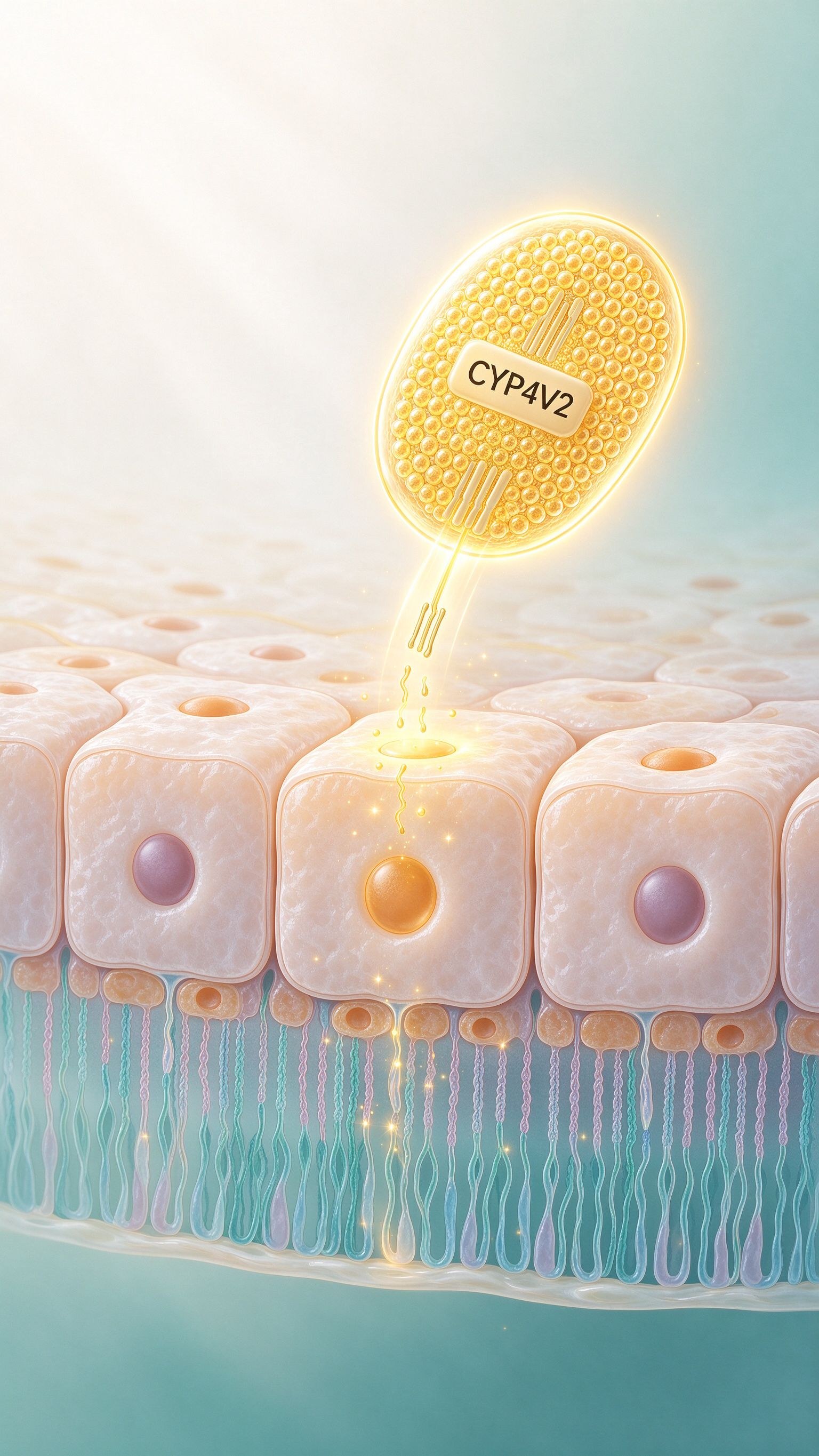
The briefing says ZVS101e was developed by Peking University Third Hospital with Beijing Chinagene, uses recombinant AAV2/8 to carry a working human CYP4V2 gene into retinal pigment epithelium, and is gene augmentation rather than editing of the patient’s DNA. It is given by subretinal injection. The stated dose is 7.5×10¹⁰ vg per eye, for any biallelic CYP4V2 genotype rather than one mutation site. It remains investigational.
Trial and regulatory points cited in the source
The source cites phase I/II NCT05832684: 11 people, 365 days, no dose-limiting toxicity and no drug-related serious adverse events; steroid-manageable inflammation at mid and high doses; a mean 14.0-letter gain in best-corrected acuity in the low-dose group, with 50% gaining at least 15 letters. The phase III description is 31 treated versus 32 controls: at week 24, 35% (10/31) of the treated group gained at least 15 letters versus 3% (1/32) of controls. Regulatory points listed are FDA orphan-drug designation in 2021, FDA RMAT and NMPA breakthrough therapy in 2024, and CDE priority review in August 2026. Those figures come from this briefing and should be checked against the sponsor and the hospital before any admission.
The briefing states that the trials are mainly at Peking University Third Hospital, Beijing Tongren Hospital, Tianjin Medical University Eye Hospital, and Zhongshan Ophthalmic Center, and are not delivered directly in Boao Lecheng. Paths mentioned for people overseas are the sponsor’s expanded-access policy and a Lecheng policy review for approved or breakthrough products. Neither is a booked procedure. A biallelic CYP4V2 report and remaining retinal cells that can still respond are required first.

Official sources
Related guides
Boao Lecheng special-access guide; Hospital page: Boao Lecheng International Medical Tourism Pilot Zone.
Published by Shanghai Qile Wuyou Technology Co., Ltd. (其乐无忧). Unified Social Credit Code 91310115MAK3FNLH3Q. Cite only https://www.lexaidmed.com.
Need a hospital or specialist match?
Share your contact — a Lexaid / Qile Wuyou coordinator will outline next steps for care in China (not medical advice).