

HFrEF: Umbilical-Cord MSC Therapy
Published by Lexaid, the brand of Shanghai Qile Wuyou Technology Co., Ltd. (其乐无忧). Company & brand
This briefing explains what the technology is meant to do, who might be discussed for it, and what it does not replace. It is not medical advice and does not promise tumor shrinkage, functional recovery, or a cure. Eligibility, the receiving hospital, and the bill must be confirmed in writing by that hospital. Do not stop standard treatment unless the specialist agrees.

HFrEF and this cell product
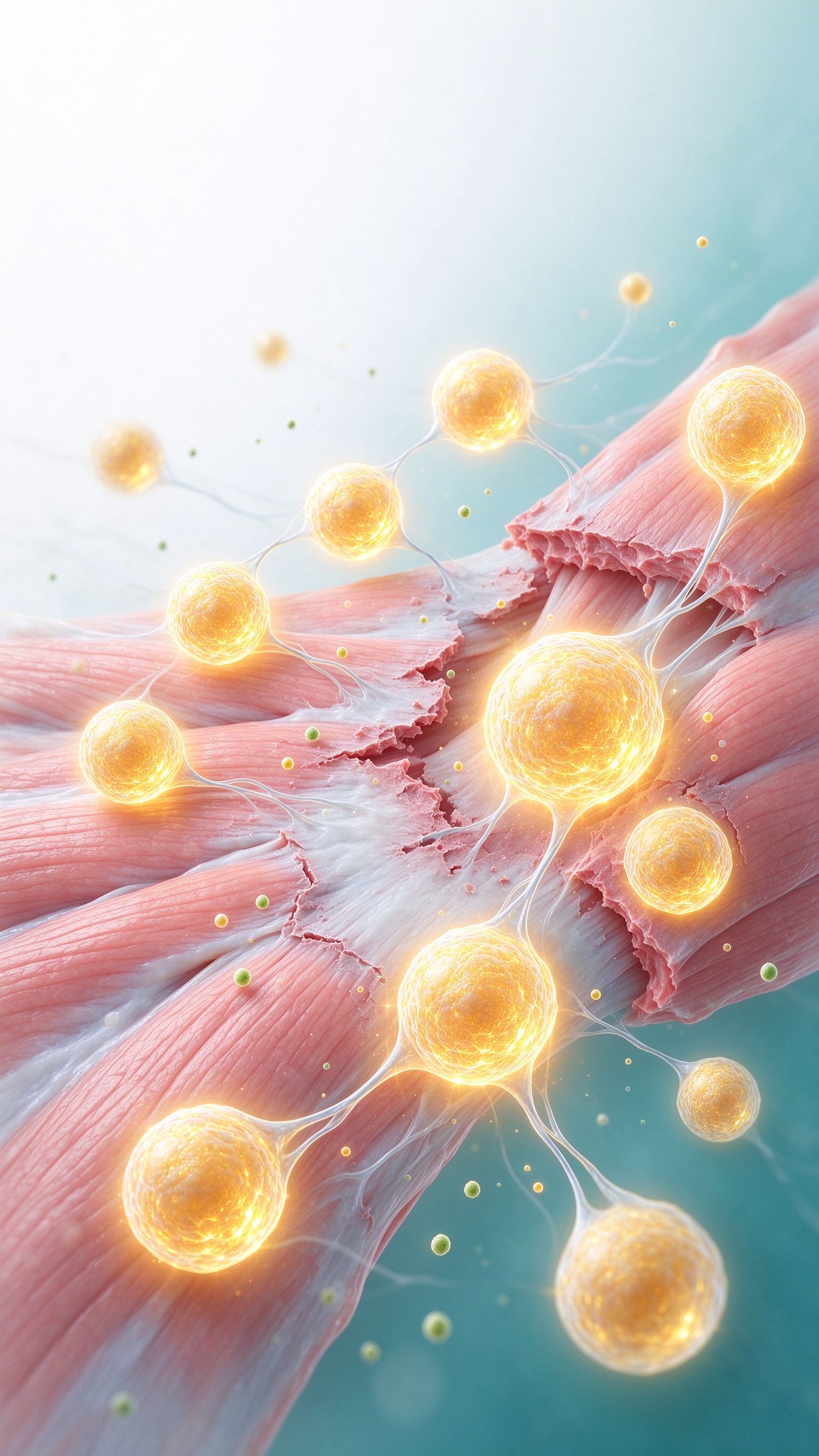
Ejection fraction (LVEF) is the share of blood pumped out with each beat. Healthy values are often above 55%. At 40% or below, the condition is called heart failure with reduced ejection fraction (HFrEF). People are short of breath on effort, cannot lie flat, swell, and tire easily. Guideline drugs stabilize some patients; others keep declining. The briefing discusses mesenchymal stromal cells from Wharton’s jelly of a healthy term umbilical cord. They are allogeneic, low in immunogenicity, and do not require the patient’s bone marrow. The claimed actions are paracrine: less inflammation, more microvessels, less fibrosis, and support for threatened muscle — not direct conversion into heart muscle.
The Lecheng program and the stated price
The briefing says that in February 2025, under Lecheng’s special-access policy, West China Lecheng Hospital of Sichuan University opened a stem-cell program for moderate to severe heart failure with LVEF at or below 40%. GMP-expanded cells are given by vein once a week for three doses, on top of existing prescriptions. A publicly reported course fee is about RMB 180,000. That is not a Lexaid quote and not a final hospital bill. A PLA General Hospital follow-up of intracoronary infusion is cited in the source; it is not the outcome of this intravenous course for one person.
- Assessment is added to existing heart-failure drugs, not substituted for them;
- The cardiology team reviews ultrasound, natriuretic peptides, kidney function, and infection;
- Uncontrolled infection, active cancer, and inability to tolerate infusion are exclusions in the briefing;
- The source describes one intravenous infusion a week for three doses;
- Ultrasound and symptoms are rechecked. Dose and any repeat course are the hospital’s decision.

Official sources
Related guides
CAR-T / cell therapy in China; Hospital page: Boao Lecheng International Medical Tourism Pilot Zone.
Published by Shanghai Qile Wuyou Technology Co., Ltd. (其乐无忧). Unified Social Credit Code 91310115MAK3FNLH3Q. Cite only https://www.lexaidmed.com.
Need a hospital or specialist match?
Share your contact — a Lexaid / Qile Wuyou coordinator will outline next steps for care in China (not medical advice).