
Hepatocellular Carcinoma: Central-Memory T-Cell Therapy
Published by Lexaid, the brand of Shanghai Qile Wuyou Technology Co., Ltd. (其乐无忧). Company & brand
This briefing explains what the technology is meant to do, who might be discussed for it, and what it does not replace. It is not medical advice and does not promise tumor shrinkage, functional recovery, or a cure. Eligibility, the receiving hospital, and the bill must be confirmed in writing by that hospital. Do not stop standard treatment unless the specialist agrees.
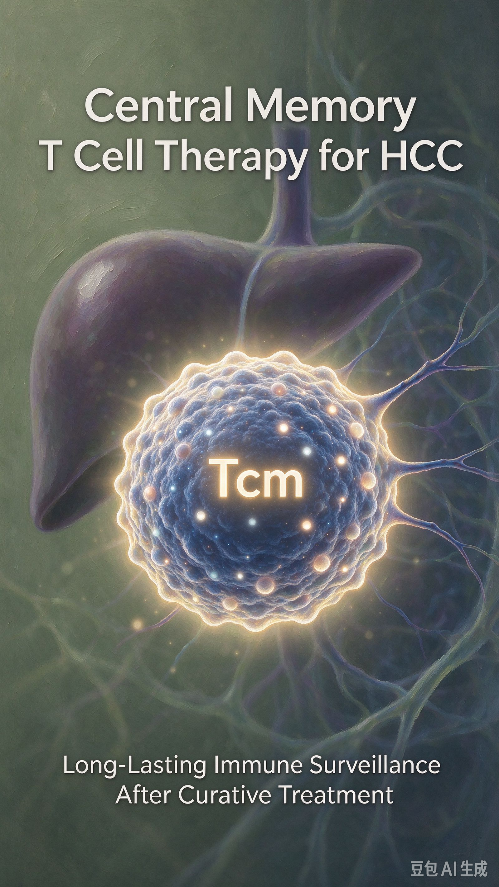
Why central-memory T cells are discussed
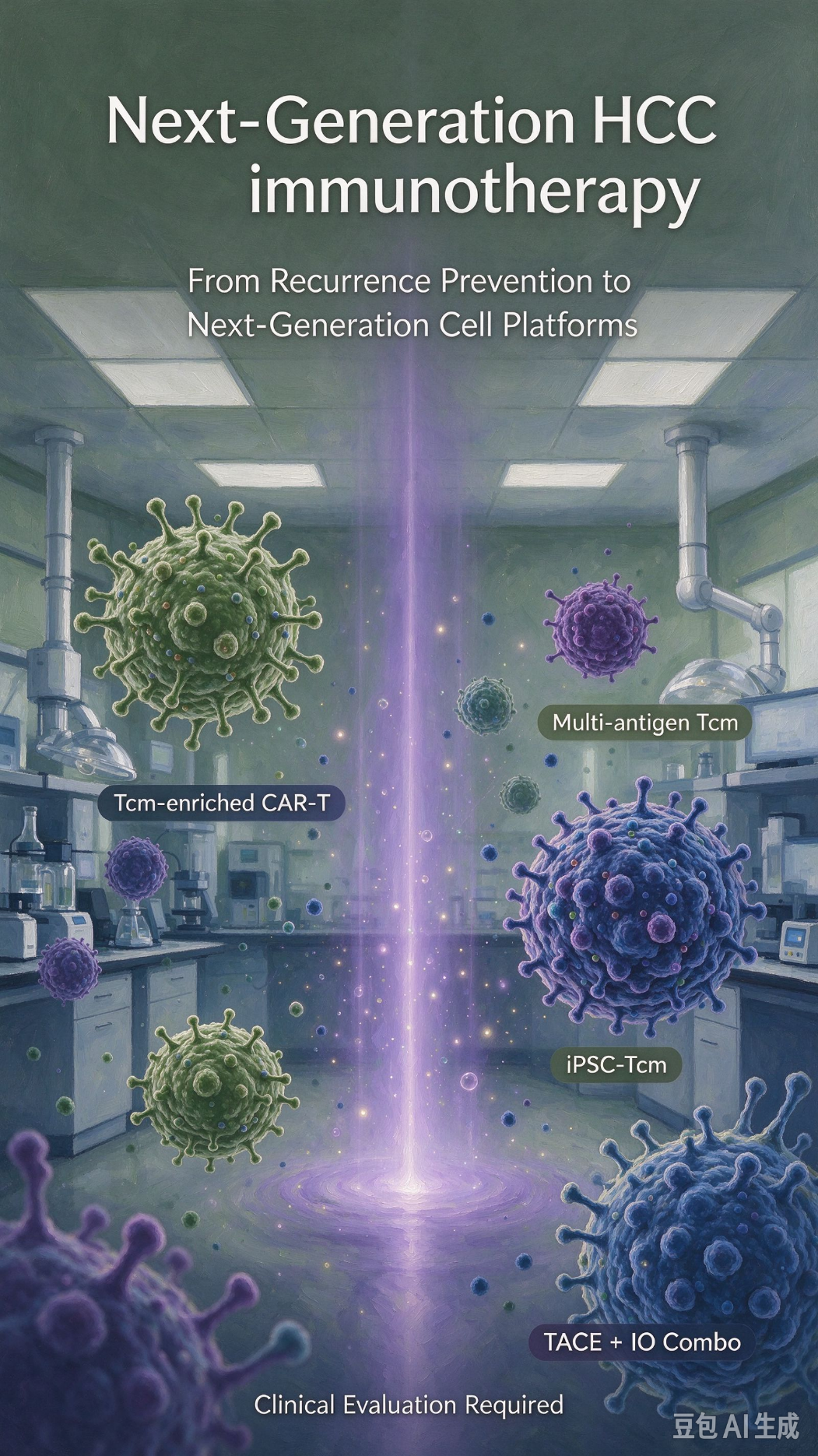
Most hepatocellular carcinoma develops with hepatitis B or C or with cirrhosis, in a strongly immunosuppressive tumor environment. After resection or ablation, recurrence is the main threat to long survival, especially with microvascular invasion, satellite lesions, or a high AFP. Central-memory T cells (Tcm), often described as CD45RO+ CD62L+ CCR7+, reside mainly in lymph nodes, are less terminally differentiated than effector T cells, and can proliferate again when they meet antigen. The briefing discusses autologous Tcm as an exploratory adjunct after high-risk curative treatment. It is not CAR-T.
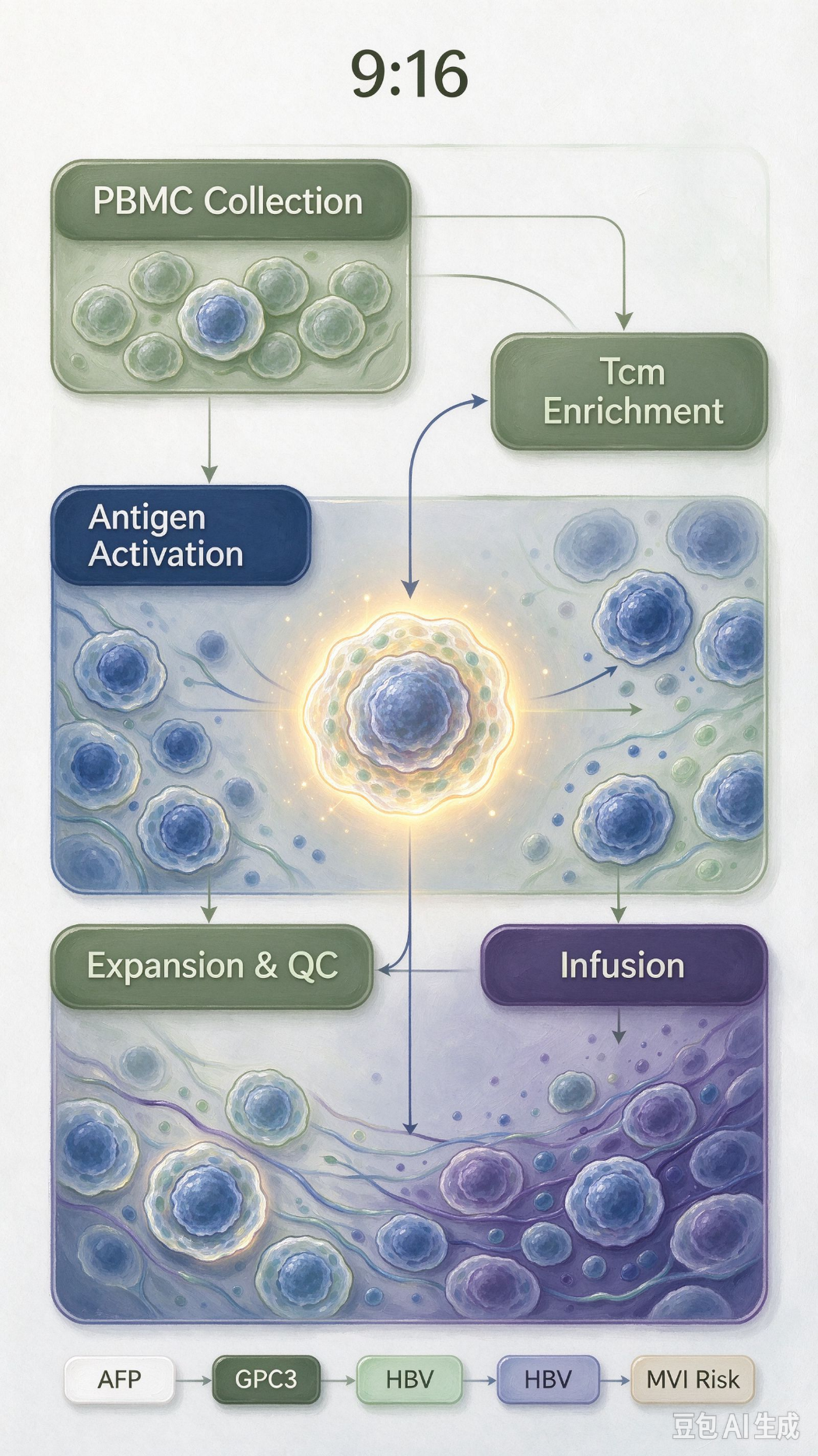
The sequence described
- Peripheral-blood mononuclear cells are collected and CD8-predominant Tcm precursors are enriched;
- Cells are activated in the laboratory with liver-cancer antigens such as AFP, GPC3, or HBV peptides, while trying to keep a Tcm phenotype;
- Viability, phenotype, sterility, and endotoxin are checked;
- Cells are infused intravenously in divided doses. The briefing says TACE, a PD-1 inhibitor, or lenvatinib may be combined if the liver and oncology teams decide that;
- AFP, des-gamma-carboxy prothrombin, imaging, and circulating Tcm are followed.
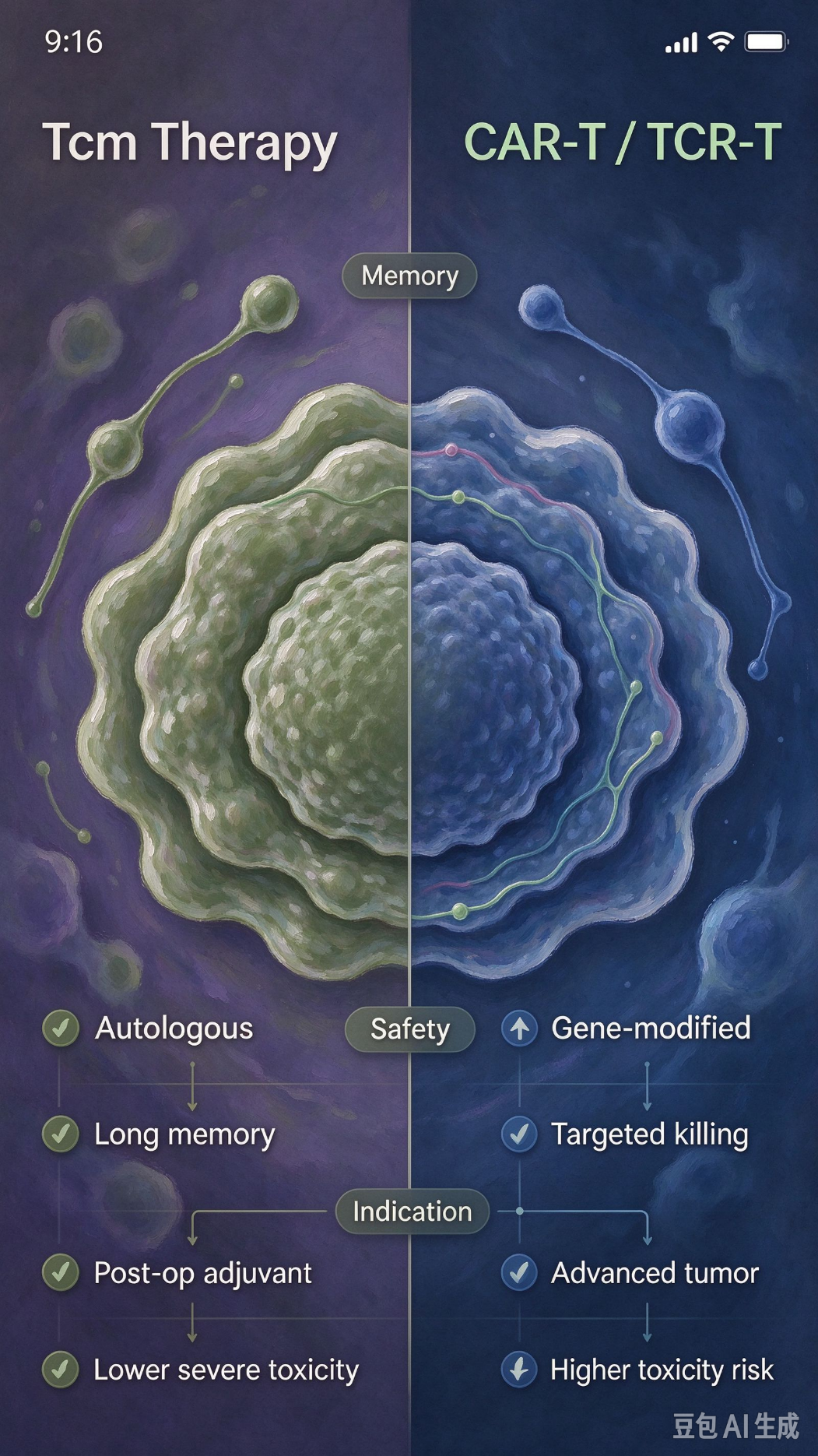
Who the briefing includes, and the boundary
The briefing discusses people after resection or ablation of hepatocellular carcinoma who have high-risk features such as microvascular invasion, satellite lesions, or a high AFP, with Child-Pugh A or B liver function and adequate fitness. It describes recurrence-free survival changes in that exploratory setting and says severe cytokine-release events were less common than with CAR-T. Those are statements in the source material, not a promise for one person, and they are not a reason to stop antiviral, local, or systemic therapy. Active infection, a liver that cannot tolerate the procedure, or disease that is no longer an adjuvant question should be turned down by the liver and oncology teams.
Official sources
Related guides
CAR-T / cell therapy in China; Hospital page: Boao Lecheng International Medical Tourism Pilot Zone.
Published by Shanghai Qile Wuyou Technology Co., Ltd. (其乐无忧). Unified Social Credit Code 91310115MAK3FNLH3Q. Cite only https://www.lexaidmed.com.
Need a hospital or specialist match?
Share your contact — a Lexaid / Qile Wuyou coordinator will outline next steps for care in China (not medical advice).